

Keeping a sump tidy is less about one magic part and more about stacking the right media in the right order. In a busy aquarium, that means you may need foam for coarse trapping, socks for fine debris, ceramic media for biological surface area, and a pump or hang-on-back unit that matches the tank’s pace.
This roundup focuses on practical fit, not glossy extras. You’ll see which picks suit small tanks, larger systems, saltwater setups, and setups that need easier upkeep.
Quick Look At The Shortlist

ALEGI Aquarium Sponge Filter Pad 20"x20"x1" 20PPI Foam
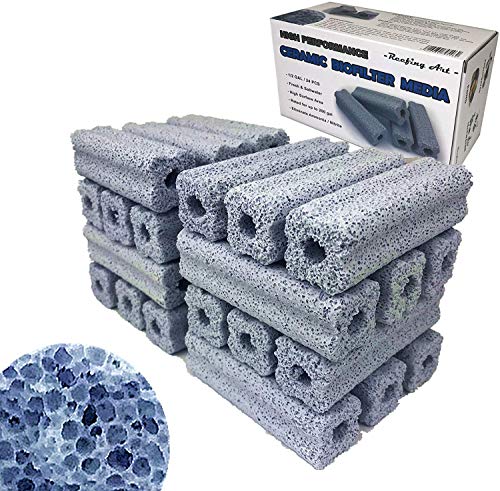
Reefing Art Ceramic Bio Filter Media 24 pcs

Encompass All 4 Pack 4 Inch Ring Filter Socks 200 Micron
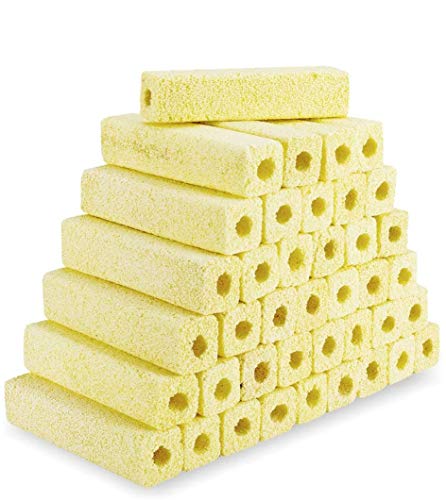
hygger 6.2-Inch Aquarium Bio Media Ceramic Filter Media Blocks

TARARIUM Fish Tank Filter 400GPH for 75-200 Gallon
Aquatic Experts 200 Micron Drawstring Filter Socks 2 Pack 4" x 14"

AQUANEAT Aquarium Bio Sponge Foam Filter Media Pad 17" x 11" x 1/2" to 1"

AQUANEAT 2 Pack Aquarium Bio Sponge Filter Media Pad 9" x 9" x 0.5" Black

AQUANEAT Aquarium Bio Sponge Filter Media Pad 36" x 12" x 1"

hygger Quiet Hang On Back Aquarium Filter 5-30 Gallon 132 GPH
More Details On Our Top Picks
A cut-to-size foam sheet like this fits the kind of sump that never seems to match a tidy, fixed insert. The 20PPI rating means the foam is relatively fine, so it can catch smaller particles than a coarse block while still giving water room to move through. In a busy fish room or a home tank with heavy debris, that balance matters more than flashy branding.
You also get a generous 20 by 20 inch sheet at 1 inch thick, which gives you room to trim around chambers, trays, or awkward corners. The trade-off is simple, you do the shaping yourself, so this suits hands-on setups more than someone who wants a drop-in part. Compared with the sock-style Encompass All and Aquatic Experts picks below, this one is the more flexible foam option.
Strong Points
- Large foam sheet trims to fit custom sump spaces.
- 20PPI density helps catch finer debris than coarse sponge.
- 1-inch thickness gives useful material without crowding a chamber.
- Works well as a pre-filter layer before other media.
Things To Consider
- You need to cut and fit it yourself.
- Fine foam can clog sooner in heavily stocked tanks, so cleaning stays part of the routine.
Feature Snapshot
Who It Suits Best
DIY-minded aquarists with custom sump layouts will get the most from this foam sheet.
Swap It Out When
Reefing Art Ceramic Bio Filter Media 24 pcs is a better fit for you when the main goal is long-term biological surface area rather than a trim-to-fit foam insert.
Ceramic media earns its place in sump filtration because the hard, porous pieces give beneficial bacteria lots of surface to live on. That makes this sort of media a steady choice for tanks that need more biological support rather than just debris trapping. In a reef or freshwater sump, the trade-off is that it does not grab visible gunk the way foam or socks do.
The 24-piece box works well in chambers that need flexible stacking or loose filling around other media. Compared with the ALEGI foam sheet, this is less about shaping and more about building a stable biological bed. Owners usually appreciate that it sits quietly in place, though rinsing it during upkeep takes a little more patience than a simple pad.
What We Like
- Porous ceramic structure supports biological filtration.
- Small pieces stack easily in baskets or chambers.
- Useful for sumps that need steady media coverage.
- Pairs well with foam or socks ahead of it.
- Simple format suits routine maintenance without complicated assembly.
Worth Noting
- It does not replace mechanical media for debris capture.
- Rinsing many small pieces takes more time than rinsing one pad.
- Loose media can shift during handling, so careful placement helps.
Core Details
Made For
Tank keepers who want a straightforward biological media layer will find this a useful fit.
Another Choice May Suit
hygger 6.2-Inch Aquarium Bio Media Ceramic Filter Media Blocks works better for larger setups that need bulkier media pieces in a sump or pond layout.
Filter socks like these sit right where sump water first enters the filtration path, and that makes them a strong first barrier against fine particles. A 200 micron weave is fine enough to catch smaller debris while still allowing water to pass through at a workable pace. For reef keepers and messy feeders, that can make the sump look cleaner between maintenance sessions.
The 4-inch ring and 9.5-inch length point to a compact, familiar fit, and the compatibility note for Eshopps and Aqueon is helpful for common sump hardware. Compared with the AQUATIC Experts drawstring pair, this version is more ring-based and slightly more traditional in how it seats. The honest read is that socks like this need regular cleaning, so they suit routine-minded setups best.
Best Bits
- 200 micron material catches fine suspended waste.
- Ring style fits standard sock holders well.
- Compact dimensions suit many common sump chambers.
- Four-pack format gives you rotation between cleanings.
Small Caveats
- Socks collect waste quickly in heavy-load tanks.
- Regular washing is part of owning this style.
- The fixed ring format is less flexible than drawstring designs.
Details At A Glance
Right Fit For
Shopper with a standard sock holder and a strong need for fine mechanical filtration will appreciate this most.
Look Elsewhere When
Aquatic Experts 200 Micron Drawstring Filter Socks is the better match for you when a ring-free setup and custom fit matter more than a fixed hoop.
Big ceramic blocks like these make sense in sumps that have room to spare and need a substantial biological base. The 6.2-inch length gives each block a noticeable footprint, so you can build a media stack that feels more like a planted foundation than a loose handful of pieces. For larger freshwater systems and ponds, that scale is the point.
Compared with the smaller Reefing Art pieces, this hygger set leans toward bulk and coverage rather than fine packing. The 7.9-pound, 40-block package gives you enough material to spread through a broader setup, though the size can feel overbuilt for a compact cabinet sump. Cleaning tends to be straightforward in theory, but moving that much media during upkeep is still a job.
Highlights
- Large block format adds substantial biological area.
- Works well in roomy sumps and pond-style filters.
- Forty-block count supports broad media layouts.
- Sturdy ceramic build suits long-term placement.
- Useful for builders who want a dense media bed.
Points To Note
- The blocks can take up a lot of chamber space.
- Less suited to small or narrow filter compartments.
- Bulkier media means more lifting during maintenance.
Technical Sheet
Built With In Mind
People maintaining larger freshwater tanks or ponds will get the clearest value from this block-style media.
Where A Sibling Pick Shines
Reefing Art Ceramic Bio Filter Media 24 pcs is a cleaner fit for smaller sumps that want easy stacking rather than a heavy media load.
This is the outlier in the roundup, because it’s a powered filter rather than a media insert. The 400GPH rating, which means gallons per hour, points to a strong circulation rate for larger aquariums, small ponds, and fountain-style setups. In a tank that needs more water movement, that kind of flow can make the system feel much more active.
The listing also calls out saltwater and freshwater use, along with submersible pump design and wave-maker function, so you get a broad utility profile. Compared with the foam and media items above, this one handles circulation and filtration in a more complete way, though it also adds the complexity that comes with powered hardware. For anyone who wants an all-in-one unit, that trade-off is part of the appeal.
Reasons To Buy
- 400GPH output suits larger water volumes.
- Submersible design keeps the unit tucked inside the tank area.
- Wave-maker function adds useful water movement.
- Works across saltwater and freshwater systems.
- Covers more than one use case in a single unit.
Areas To Watch
- Powered filters need more attention than simple media inserts.
- Higher flow can be more than a small tank needs.
- Place it carefully so circulation matches the layout.
Feature Rundown
Who Should Grab It
Owners of bigger tanks who want a powered filtration and circulation solution will find the TARARIUM a natural fit.
Where Another Pick Fits Better
For a smaller, quieter filtration job, hygger Quiet Hang On Back Aquarium Filter 5-30 Gallon is a more sensible match.
Drawstring socks solve a small but common sump annoyance, the ring that doesn’t quite suit your holder. That ring-free format gives you a little more freedom during placement, and the 200 micron mesh still does the same fine particle work you want from this category. For custom sump owners, that combination feels tidy and practical.
The 4 by 14 inch size makes sense for deeper sock chambers, and the USA-made note will matter to some shoppers who prefer a domestic custom build. Compared with the Encompass All ring socks, this one leans more adaptable, though it still asks for the same regular rinse-and-rotate routine. One thing worth considering is that long socks can hold a lot of waste before cleaning, which is useful and messy in equal measure.
Positives
- Drawstring top makes fitting easier in custom holders.
- 200 micron mesh helps trap fine suspended debris.
- Long 14-inch body gives good catch capacity.
- Two-pack setup works well for rotation.
- Ring-free design avoids fit problems with some socks.
Honest Caveats
- Like most socks, it needs regular washing.
- Longer socks can fill up quickly in heavy bioload tanks.
- The drawstring style may feel less rigid than ring-mounted options.
At A Glance
Best Suited To
Custom sump users who want a flexible, fine-mesh sock will get strong mileage from this pair.
Where A Sibling Pick Shines
Encompass All 4 Pack 4 Inch Ring Filter Socks 200 Micron is the better fit for standard holders that already favor a fixed ring.
Some sumps need a pad that covers the job without taking over the chamber, and that is where this AQUANEAT sheet fits nicely. The 17 by 11 inch footprint is easier to handle than larger slabs, while the 1/2 to 1 inch thickness gives you a bit of trimming room for different slot heights. It works well in smaller systems or as a pre-filter layer before finer media.
Compared with the larger ALEGI sheet, this one feels more compact and less likely to crowd a tight filter bay. The open-cell foam, which means the foam has connected air pockets for water to pass through, helps water move while still collecting debris. You may find it especially handy in a sump that needs a simple foam insert rather than a pile of loose media.
Upsides
- Smaller sheet is easier to fit in tight sumps.
- Open-cell structure supports smooth water passage.
- Trim range adds a little flexibility during setup.
- Useful as a front-line mechanical layer.
Room For Improvement
- Single-sheet format gives you less total coverage than larger pads.
- May need more frequent rinsing in heavy-load tanks.
Core Details
The Right Fit
Compact sump owners who want a tidy foam layer with modest trimming needs will appreciate this pad.
Reach For A Different Pick When
ALEGI Aquarium Sponge Filter Pad 20PPI Foam is the better choice for larger custom layouts that need more material to cut from.
Two smaller foam sheets like these make day-to-day sump upkeep easier to plan around. The 9 by 9 inch size keeps the material manageable, and the black finish is useful in setups where you prefer the media to disappear visually behind the equipment. In a smaller sump or pond filter, that neatness matters more than extra bulk.
Compared with the single larger AQUANEAT pad above, this two-pack gives you backup material and a little more flexibility around replacement schedules. The 0.5 inch thickness also keeps things slim, which helps in cramped filter spaces. The trade-off is that each sheet covers less area, so larger systems may need a different option.
What We Like
- Two sheets give you a spare for rotation.
- Small footprint suits compact sump sections.
- Black foam blends in nicely inside many setups.
- Easy to trim for modest filter bays.
Points To Note
- Each sheet covers less area than larger pads.
- Thin foam may need more frequent cleaning in busy tanks.
- Better for modest systems than expansive sumps.
Feature Card
Whose Shelf It Belongs On
Small-tank owners who like a simple, low-profile foam pad will get good use from this two-pack.
Where A Sibling Pick Shines
AQUANEAT Aquarium Bio Sponge Foam Filter Media Pad 17 x 11 x 1/2 to 1 is a better fit for larger chambers that need more single-sheet coverage.
The long-sheet format gives you serious freedom for large custom filtration jobs. At 36 by 12 inches, this pad can be trimmed into multiple sections, which is useful in a sump with more than one chamber or a DIY project that needs matched pieces. The larger 72-inch option listed in the title also signals the same cut-to-fit idea, just on a bigger canvas.
Compared with the smaller AQUANEAT pads, this one is the more versatile choice for people building around an unusual cabinet or a wide sump tray. Open-cell foam keeps the water path workable while still offering mechanical capture and a place for bacteria to settle. The catch is plain, more material also means more trimming and more storage space before use.
Plus Points
- Large sheet supports multiple custom cuts.
- Useful for wide or irregular sump layouts.
- Open-cell construction balances flow and filtration.
- Good value for people needing several sections from one sheet.
- Works well as a long-term foam supply for DIY builds.
Softer Spots
- Large sheet needs more storage space.
- Trim work takes time at setup.
- Can be overkill for very small systems.
Feature Rundown
Perfect Match For
DIY aquarium keepers who need one large foam sheet for repeated custom cuts will find this especially useful.
Skip It When
AQUANEAT 2 Pack Aquarium Bio Sponge Filter Media Pad 9 x 9 x 0.5 Black is the easier route for small sumps that need compact pieces right away.
Hang-on-back filters sit outside the tank rim, which keeps the interior cleaner and often makes maintenance feel less cramped. This hygger model adds a surface skimmer, spray bar, three floss pads, bio media, adjustable flow, and an easy water-change path, so you get a lot of function in one compact footprint. For 5 to 30 gallon tanks, that layered approach can simplify daily care.
Compared with the foam and sock picks in this list, this is the most complete plug-in style option for smaller aquariums that still want richer filtration stages. The 132GPH flow is strong enough for the stated size range, though a smaller tank may need the flow dialed back. One thing worth considering is that more features usually mean a little more setup time, but the payback is a more organized filter routine.
Bright Spots
- Hang-on-back layout keeps equipment outside the tank.
- Surface skimmer helps collect film at the top.
- Three floss pads and bio media add layered filtration.
- Adjustable flow gives you more control over circulation.
- Easy water-change path reduces routine hassle.
Minor Gripes
- More features mean more setup steps at first.
- May be more filtration than a tiny tank needs.
- External placement still leaves some visible hardware on the rim.
Core Details
Built With In Mind
Small aquarium owners who want a more complete filter setup without moving to a large canister unit will appreciate this model.
Where A Sibling Pick Shines
For a simpler foam-based approach in a compact sump, AQUANEAT 2 Pack Aquarium Bio Sponge Filter Media Pad 9 x 9 x 0.5 Black is the easier, lower-part-count choice.
How To Choose The Right Aquarium Sump Filters
Match The Media To The Job
Mechanical media catches visible waste, while biological media gives bacteria more surface to colonize. Foam pads and filter socks handle debris first, then ceramic pieces keep the biological side steady. That layered setup is usually the cleanest route for a sump that serves a busy tank.
Size And Fit Matter More Than Flash
A great media type still fails when it does not fit the chamber. Measure length, width, depth, and holder style before you settle on a pad, sock, or block. Cut-to-size foam helps in odd spaces, while fixed-ring socks make sense in standard holders.
Flow, Maintenance, And Tank Load
Higher flow helps move water through the system, but too much speed can reduce contact time in smaller tanks. Heavier fish loads need more frequent cleaning, especially with socks and finer foam like 20PPI pads. The right choice is the one you can keep up with during normal weekly care.
Build A Simple System, Then Add Layers
A sump works best when each stage has a clear job. Start with coarse capture, add fine capture, then finish with bio media where there is room for water to move slowly. That approach keeps maintenance easier and helps you avoid stuffing one chamber with every media type at once.
What To Weigh Before You Choose
Mistakes Worth Dodging
A common slip-up is buying media by shape alone and ignoring chamber depth or holder style. Another is choosing very fine media for a tank that already runs heavy, then getting frustrated by constant cleaning. Matching the item to your routine matters as much as matching it to the sump.
The Upgrade Payoff
More expensive sump gear usually gives you better fit control, larger usable surface area, or extra stages in one unit. That can save time in a crowded aquarium cabinet or a system that needs less fiddling each week. Paying up makes sense when you want fewer compromises, not just more parts.
Frequently Asked Questions
What is the main job of sump filters?
They move water through media that catches debris and supports biological filtration. In a sump, that usually means a staged setup rather than one single insert.
Should foam or socks come first?
Socks and foam both handle mechanical capture, so either can work first depending on the chamber layout. The cleaner-looking result usually comes from placing the coarse stage before the finer one.
How often do sump media need cleaning?
That depends on fish load, feeding habits, and the type of media. Socks and finer foam usually need attention sooner than ceramic bio media.
Is ceramic media enough on its own?
Ceramic media helps with biological support, but it does not catch visible particles very well. Most sumps work better with ceramic pieces paired with a mechanical stage.
Are larger media sheets better than small ones?
Larger sheets give you more flexibility for custom cuts and broader coverage. Smaller sheets are easier to fit in tight chambers and are simpler to handle during upkeep.
Closing Thoughts
The right sump setup usually feels calm, not complicated. If you need flexible foam, go with a cut-to-fit pad. If you want cleaner water polish, a sock makes sense. For biological support, ceramic media still earns its place. Choose the piece that fits your tank size, your maintenance rhythm, and the amount of room inside the cabinet, and the whole system gets easier to live with.
