

Automatic aquarium feeders can take the edge off daily routines, especially when your schedule is full or your tank sits in a room you don’t pass through often. The right pick depends on food shape, portion control, tank size, and how much setup you want to manage. Some models suit small betta tanks, while others make more sense for vacation coverage or larger aquariums. A steady feeder can feel like a quiet backup hand, not a flashy gadget.
The Shortlist At A Glance
LONDAFISH Aquarium Fish Feeder 0.175L Capacity

Papettly Automatic Fish Feeder for Aquarium with USB Cable

Pawfly Automatic Fish Feeder for Aquarium 60 ml Adjustable Fish Food Dispenser

EHEIM TWIN Automatic Feeder Battery Operation

Automatic Fish Feeder for Aquarium New Generation 2026 Model-ML

Automatic Fish Feeder Dispenser for Aquarium 200ml Capacity
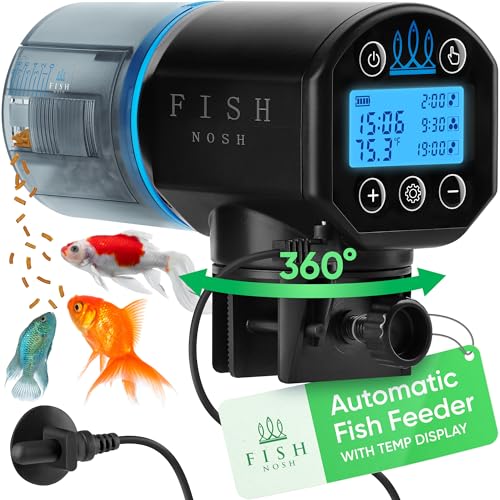
Automatic Fish Feeder for Aquarium with Digital Thermometer 2026

Eheim Feed-Air Fish Feeder Everyday Unit

AquaMiracle Programmable Automatic Fish Feeder for Aquarium
More Details On Our Top Picks
Small tanks usually make you care about footprint first, and this LONDAFISH unit stays focused on that need. Its ABS plastic body, 0.175L chamber, and timer setup suit pellet, particle, and flake food, so it fits a betta bowl or a modest desktop tank better than a crowded community setup.
The trade-off is capacity, which stays modest by design, so this is not the pick for long gaps away from home. That said, for daily feeding routines in a compact aquarium, the simple format tends to be easier to place and keep clean than bulkier feeders.
Strong Points
- Small body suits cramped tank stands and shelf setups.
- Timer control helps keep a steadier routine during busy weeks.
- Works with pellets, particles, and flakes, which gives you some food flexibility.
- ABS plastic keeps the build light enough to handle without fuss.
Points To Note
- The 0.175L chamber is better for short coverage than long trips.
- Very fine or sticky foods can be less predictable in many basic feeders.
Core Details
Who Should Grab It
Compact-tank owners who want a simple timer feeder for routine feeding will get the most from this one.
Swap It Out When
Pawfly Automatic Fish Feeder for Aquarium 60 ml Adjustable Fish Food Dispenser suits you better when you want a compact option with a more clearly sized chamber for 5 to 20 gallon tanks.
Compared with the simpler LONDAFISH pick, Papettly leans into more control. The LCD display and USB cable make it feel better suited to hobbyists who want a clearer setup process, and the 15-compartment layout gives you room to work with more than one feeding pattern.
One thing worth considering, though, is food fit, because the source data says it is not meant for flake or shrimp food. For households juggling fish and turtle tanks, that limitation matters less than the flexibility of up to three portions per feeding session.
What We Like
- LCD display makes schedule checks more straightforward.
- USB power adds flexibility during setup and placement.
- Fifteen compartments support a more structured feeding plan.
- Up to three portions per session helps you fine-tune amounts.
- Works well for mixed fish and turtle tank routines.
Small Caveats
- Flake and shrimp foods are excluded, so the fit is narrower than some others here.
- The compartment design adds a little more cleanup than a basic drum-style feeder.
Feature Rundown
Built With In Mind
Tank owners who want an LCD readout and more granular feeding control will feel right at home with this model.
Where A Sibling Pick Shines
AquaMiracle Programmable Automatic Fish Feeder for Aquarium makes a better match for you when you want a drum-style feeder with a more traditional volume-adjustable layout.
Pawfly stays refreshingly straightforward, and that helps in the kinds of setups most people actually keep at home. Its 60 mL chamber and compact 3 x 3.9 x 4.5 inch size make sense for 5 to 20 gallon tanks, especially when you want a feeder that doesn’t take over the lid area.
The battery-powered design, with batteries not included, keeps the setup portable but adds one more thing to remember before installation. For short vacations or weekend away coverage, that balance of small size and modest storage is often enough.
Highlights
- Small footprint fits neatly on many modest tanks.
- 60 mL capacity gives you enough room for short trips away.
- Battery operation keeps placement simple around tight tank spaces.
- The size range lines up well with 5 to 20 gallon aquariums.
Areas To Watch
- Batteries are not included, so you need to plan ahead.
- The compact chamber is better for short coverage than extended absences.
- Pellets and strips are the clear fit, not every food shape.
At A Glance
Right Fit For
Apartment tanks, tabletop aquariums, and short vacation coverage all suit this feeder well.
Look Elsewhere When
FISHNOSH Automatic Fish Feeder for Aquarium New Generation 2026 Model-ML is the better match for you when you want a more flexible feeder for both small tanks and larger aquariums.
Where the earlier feeders focus on size or feature count, EHEIM takes a more established, no-nonsense path. Battery operation and the twin-feed layout make it a sensible match for aquariums that need two separate release points or a little more scheduling flexibility.
Depending on your tank layout, the dual structure can be a real convenience or a bit more feeder than you need. For hobbyists who value a more mature-feeling design, it stands out as a measured upgrade rather than a novelty.
Upsides
- Twin-feed design supports two output points.
- Battery operation keeps placement independent from nearby outlets.
- The layout suits more deliberate feeding routines.
- Feels like a fit for long-term tank setups that reward consistency.
Worth Noting
- The twin format is more specialized than a plain single-chamber feeder.
- Battery upkeep becomes part of the routine.
Details At A Glance
Whose Shelf It Belongs On
Experienced hobbyists with a steady aquarium routine will appreciate the more specialized layout here.
Another Choice May Suit
Eheim Feed-Air Fish Feeder Everyday Unit fits you better when you want a simpler Eheim option with a more basic everyday profile.
This one leans into broad use, which is handy for homes that keep more than one aquarium size in play. The source description points to a timer-based dispenser for small tanks, big aquariums, and ponds, so the appeal is versatility rather than a narrow niche.
The model name, Model-ML, doesn’t add much on its own, but the overall positioning does. For a busy household that wants one feeder to cover more than one setup, that wider fit can matter more than fancy extras.
Reasons To Buy
- Built for several tank sizes, so you aren’t boxed into one setup.
- Timer support helps keep feedings regular.
- Works as a practical backup during travel or long workdays.
- Feels useful for homes with mixed aquarium needs.
Room For Improvement
- The source data stays light on detailed setup information.
- Broader positioning can mean less specialization for very small tanks.
Feature Snapshot
The Right Fit
Households that keep multiple tank sizes and want one feeder with a broad job description will get the most value from this model.
Where A Sibling Pick Shines
LONDAFISH Aquarium Fish Feeder 0.175L Capacity is the cleaner fit for you when your tank is small and you want a more compact body.
Capacity is the headline here, and a 200ml chamber changes the way you think about short trips and vacation coverage. JuzPetz also pairs that with battery power, included batteries, and a timer that supports up to four feedings per day, so the setup feels more complete than the most basic feeders in this list.
The daily or every-other-day schedule choice adds a useful layer of control, especially for tank owners who like a more structured routine. For turtle tanks or small aquariums, the extra space can be reassuring, though a larger chamber also asks for a bit more attention during refills and cleaning.
Best Bits
- 200ml capacity gives you a stronger buffer between refills.
- Batteries are included, which makes first setup easier.
- Up to four feedings a day supports a tighter routine.
- Daily or every-other-day timing gives you schedule flexibility.
- Useful for turtles as well as aquarium fish.
Honest Caveats
- A larger chamber usually means a little more cleaning effort.
- The broader capacity can be more feeder than tiny desktop tanks need.
Quick Facts
Made For
Busy homes that want fewer refill stops and a more structured feeding routine will appreciate this one.
Where Shoppers Go Wrong
Pawfly Automatic Fish Feeder for Aquarium 60 ml Adjustable Fish Food Dispenser is the better fit for you when a smaller chamber and tighter footprint matter more than capacity.
Some feeders stay focused on dispensing food, while this FISHNOSH model adds a digital thermometer, which gives it a more monitoring-friendly feel. That extra detail can be useful in a setup where you already pay attention to tank conditions and want a feeder that lives in the same routine.
The programmable dispenser and adjustable portions keep it practical for both small and larger tanks, and that makes it more flexible than the most barebones option here. The trade-off is that a feature-rich layout can take a little longer to learn, so it suits detail-minded owners best.
Positives
- Digital thermometer adds useful tank feedback in one unit.
- Programmable feeding helps keep the routine steady.
- Adjustable portions let you tailor the amount more closely.
- Fits both small and large tanks, which broadens the use case.
Minor Gripes
- The extra features may take a little more setup time.
- Simple users may not need the thermometer add-on.
Spec Overview
Best Suited To
Detail-oriented tank owners who want a feeder with extra monitoring value will likely appreciate this model most.
Skip It When
Eheim Feed-Air Fish Feeder Everyday Unit is the simpler route for you when a basic everyday feeder makes more sense than a feature-heavy one.
After the feature-packed FISHNOSH model, this Eheim looks refreshingly plain, and that’s part of its appeal. It reads like a straightforward backup feeder for regular day-to-day use, the sort of choice that suits owners who want less fuss and fewer functions to learn.
The honest read is that the source details are sparse, so this unit stands more on Eheim’s simple everyday positioning than on a long feature list. For a tank that just needs basic feeding coverage, that restraint can be a strength rather than a drawback.
Bright Spots
- Simple everyday format keeps the setup easy to understand.
- Works well as a routine backup feeder.
- Plain design can suit owners who dislike cluttered controls.
- The light feature load may make upkeep feel easier.
Areas To Watch
- The source data leaves many details unstated.
- Minimal features mean less control than the programmable picks above.
Core Details
Built With In Mind
Owners who want a basic backup feeder with very little learning curve will get the most from this one.
Where A Sibling Pick Shines
AquaMiracle Programmable Automatic Fish Feeder for Aquarium suits you better when you want visible timer control and adjustable volume settings.
AquaMiracle lands in the middle ground nicely, which is useful when you want control without wandering into complicated territory. The programmable timer handles up to four feedings a day, and the easy mode that sets two daily feedings at 8am and 8pm makes it friendlier than many fiddly units.
Volume adjustment from one to three drum rotations gives you room to tailor portions, and the food fit includes granules, pellets, and strips. That mix of control and simplicity makes it a smart everyday option for many standard home aquariums.
What We Like
- Up to four feedings per day supports a more tailored routine.
- Easy mode cuts down on setup time for a common schedule.
- One to three drum rotations let you shape the portion size.
- Handles granules, pellets, and strips, which helps with food flexibility.
- Digital display makes schedule checks easier at a glance.
Softer Spots
- More options mean slightly more setup than a plain basic feeder.
- Strips and granules still need to suit the drum opening well.
Feature Card
Who It Suits Best
Home aquarium owners who want a programmable feeder with a clear learning curve will feel well served here.
Reach For A Different Pick When
Papettly Automatic Fish Feeder for Aquarium with USB Cable works better for you when you want a more compartment-based layout and USB power support.
How To Choose The Right Automatic Aquarium Fish Feeders
Food Type Comes First
The food you already use should lead the search, because feeder drums and compartments do not all handle the same shapes well. Pellets and granules are usually the easiest match, while flakes, strips, and very fine mixes can ask more from the dispenser design. That matters in a busy kitchen or office tank where you want routine feeding without babysitting the unit.
Look for clear compatibility notes before anything else. A feeder that suits your food saves you from clogs, uneven portions, and the kind of cleanup that turns a convenience item into a chore.
Capacity Changes The Rhythm
Capacity decides how often you refill, not just how long the unit sits on the tank. A smaller chamber works well for betta tanks or short weekend coverage, while a larger reservoir makes more sense for travel or homes with several tanks. The trade-off is simple, larger capacity usually means a bigger footprint and a bit more cleaning.
Think about your real routine, not just the tank size on paper. A feeder that matches your travel schedule will feel smoother than one that looks impressive but asks for constant attention.
Timing Control Should Match Your Schedule
Some feeders keep things basic with one release pattern, while others let you set multiple feedings and different drum rotations. That control helps when your fish do better on smaller, spaced-out portions rather than one larger drop. It also matters for anyone who leaves early and returns late, because timing tools remove a lot of guesswork.
Simple controls suit beginners who want less menu diving. More advanced programming is worth it for owners who split feedings through the day or manage multiple tank habits at once.
Power Source And Placement Matter
Battery operation offers easier placement, especially on tanks far from outlets or in rooms where cords would look messy. USB power can work well too, though it usually ties the feeder more closely to your setup. The practical question is where the unit will sit and how often you want to think about power upkeep.
Choose the power style that fits the tank stand, lid space, and your own maintenance habits. A neat install often matters more than a long feature list, especially in small rooms.
Things Worth Knowing First
Common Shopping Slip Ups
Many people start with capacity and skip food compatibility, which is how they end up with a feeder that does not like the food already in the house. Another common miss is choosing a big reservoir for a tiny tank, then dealing with extra bulk and more fiddling than expected.
Installation details deserve attention too. A feeder that sits awkwardly on the lid or needs more room than your stand allows can become annoying fast.
When Paying More Pays Off
Higher-tier feeders usually cost more because they add better programming, clearer displays, dual-feed layouts, or extra monitoring features like a digital thermometer. Those touches make sense for owners who keep a steady routine and want more control over portions and timing.
The upgrade is worth it when the tank matters enough that small inconsistencies feel annoying. For casual backup feeding, a simpler model often does the job without extra complexity.
Frequently Asked Questions
Can automatic feeders handle flakes well?
Some can, but not all. You should always check the listed food types because flake handling depends on the chamber design.
How much capacity do you really need?
Smaller tanks and short weekend trips usually work fine with modest capacity. Longer absences and larger tanks benefit from a bigger chamber.
Are battery-powered feeders easier to place?
Usually, yes. Battery power gives you more freedom with tank placement and keeps cords out of the way.
Do programmable feeders suit beginners?
Yes, as long as the controls are clear. Simple preset modes help a lot when you want less setup time.
What matters most for everyday use?
Food compatibility, reliable timing, and easy refilling matter most. A feeder that handles those three well tends to feel useful every day.
Closing Thoughts
The best automatic aquarium feeder for you depends on the way your tank actually runs, not just on the spec sheet. Small aquariums usually benefit from compact, easy-to-place models, while busier homes may prefer larger chambers or more scheduling control. A digital display, dual-feed layout, or added thermometer can be worth the step up, but only when those extras fit your routine. Choose the feeder that matches your food type, tank size, and maintenance habits, and the whole setup feels calmer.
