

Water checks can feel routine until a tank starts acting off, then every small detail matters. The right aquarium testing kits help you track pH, ammonia, hardness, and other water conditions before fish stress builds into a bigger problem. That matters in a busy home tank, a pond setup, or a saltwater system where small swings can matter fast.
Some kits lean simple and fast, while others give you more detail or more reagent-based precision. You’ll see both styles here, along with a few strong middle-ground picks for everyday maintenance. The goal is straightforward, match the kit to your tank, your schedule, and how much detail you want from each check.
Quick Look At Our Shortlist

Tetra EasyStrips 6-In-1 Aquarium Test Strips (19542)

API High Range pH Test Kit 160-Test

AAwipes Aquarium Ammonia Test Strips 8-in-1, 25 Strips

Salifert Alkalinity Calcium Magnesium Combo Test Kit
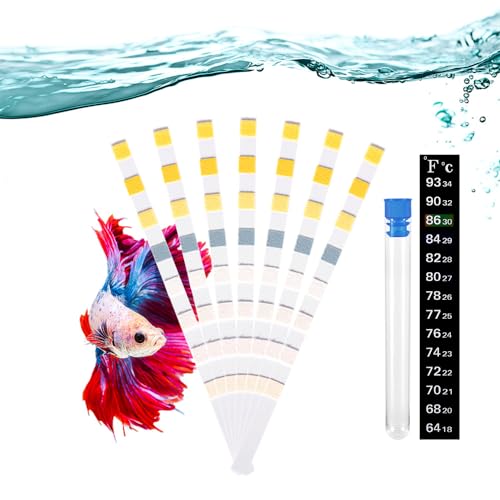
DaToo 8 in 1 Aquarium Test Kit Test Strips, 100 Strips

Merydi 9-Way Aquarium Test Strips, 50ct

API Freshwater Master Test Kit

A QUILA Aquarium Water Test Kit 9-in-1, 150CT

SaySummer Aquarium Test Strips for Fish Tank, 125 Counts

Pawfly 5 in 1 Aquarium Water Master Test Kit
More Details On Our Top Picks
Tetra EasyStrips keeps the routine side of tank care simple, which matters more than it sounds like it should. The strip format suits quick checks before a water change, and it fits neatly into a weekly maintenance habit for busy households.
Compared with the more detailed reagent kits later in this list, this one leans on speed and convenience over lab-style precision. You may find that trade-off worth it for community tanks, starter setups, or any tank that needs frequent check-ins without a lot of fuss.
Strong Points
- Six-in-one strips trim down routine water checks.
- Fast readouts suit a weekly maintenance rhythm.
- Compact storage makes it easy to keep near the tank.
- Good fit for newer hobby setups that need broad coverage.
Things To Consider
- Strip-style kits usually give less detail than drop-based kits.
- Color matching can feel less exact in dim rooms.
Feature Snapshot
Who It Suits Best
Beginners and routine tank keepers who want a fast, broad check without much setup will get the most from this strip kit.
Where Another Pick Suits Better
API Freshwater Master Test Kit suits you better when you want more detailed freshwater readings and don’t mind a reagent-based routine.
This API kit focuses on high-range pH, so it speaks to tanks where the usual low-range strip does not tell the whole story. That makes it a smart match for freshwater and saltwater setups that need a tighter handle on alkaline water conditions.
The reagent format takes a little more attention than strips, but the upside is clearer control over one specific metric. For most dedicated aquarists, that narrow focus is useful rather than limiting, especially alongside a broader kit like Tetra EasyStrips.
What We Like
- High-range pH coverage helps with alkaline water monitoring.
- Works across freshwater and saltwater systems.
- 160 tests stretch the kit across a long maintenance period.
- Focused design keeps one important reading front and center.
Worth Noting
- It only addresses high-range pH, so it is not a full-panel kit.
- Drop testing takes more setup than a strip check.
Technical Sheet
Best Suited To
Experienced hobbyists and saltwater keepers who need specific pH visibility will get the most value here.
Swap It Out When
API Freshwater Master Test Kit suits you better when you want a broader freshwater panel instead of a single-metric pH focus.
AAwipes leans into breadth, which is handy for tanks that need more than a quick pH glance. The 25-strip count keeps it in the territory of short-term monitoring, so it fits occasional checks rather than a long stretch of repeated use.
Compared with Tetra EasyStrips, this option reads like the more data-heavy everyday strip kit, while still staying simple to store and use. That balance works well for smaller home aquariums, quarantine setups, or anyone keeping an eye on ammonia alongside the usual basics.
Positives
- Eight-in-one coverage spreads attention across multiple water factors.
- Ammonia monitoring matters for tanks that are still settling.
- Strip format keeps routine checks quick and low-effort.
- Small pack size is easy to tuck beside aquarium supplies.
- Works well for owners who want a wider snapshot without drop bottles.
Softer Spots
- 25 strips is a modest supply for frequent testers.
- Strip matching can feel less exact than liquid methods.
Core Details
Who Will Love This
Home aquarists who want a compact strip kit with broad coverage will find this one easy to slot into regular care.
Look Elsewhere When
DaToo 8 in 1 Aquarium Test Kit Test Strips suits you better when you want a larger strip count for ongoing routine use.
Salifert takes a more focused route than the strip kits, and that narrow focus makes sense for water care that depends on mineral balance. Alkalinity, calcium, and magnesium matter most in reef-style systems and other setups where those levels shape how stable the tank feels over time.
The drop-based format asks for a little more patience, yet the benefit is a more detailed read on the numbers that matter here. For hobbyists who care more about mineral control than broad screening, this kit feels closer to a precision tool than a general-purpose strip pack.
Upsides
- Targets three key mineral measures in one kit.
- Drop-by-drop use supports more careful water management.
- Strong fit for reef-oriented or mineral-sensitive tanks.
- Helps you watch the balance that strip kits often skip.
Areas To Watch
- It is more specialized than broad aquarium test strips.
- The drop routine takes more attention and cleanup.
- New hobbyists may prefer a simpler multi-strip format first.
Feature Card
Built With In Mind
Advanced hobbyists and reef keepers who care about mineral balance will get the most from this focused kit.
Where A Sibling Pick Shines
API Freshwater Master Test Kit suits you better for broader freshwater monitoring when you need more than mineral data.
DaToo leans into volume, and that makes a practical difference for tanks you monitor often. A 100-strip pack keeps the kit useful for ongoing maintenance, especially in homes where more than one tank gets checked on a schedule.
Compared with AAwipes, this one looks better suited to longer-term routine use because the strip count goes further. It still stays simple enough for newer hobbyists, which is useful when you want coverage without turning water checks into a chore.
Reasons To Buy
- 100 strips give you more runway between refills.
- Eight-in-one coverage keeps everyday checks broad.
- Good fit for frequent maintenance in busy homes.
- Strip format keeps setup short and manageable.
Small Caveats
- Strip results still depend on careful color reading.
- It does not replace a deep reagent-style kit for precision work.
Details At A Glance
Made For
Households that keep up with tank care on a regular schedule will get the most practical value here.
Another Choice May Suit
Salifert Alkalinity Calcium Magnesium Combo Test Kit suits you better when mineral balance matters more than strip count.
Merydi stretches beyond basic tank checks, which is helpful for pond owners and mixed aquatic setups that need a wider view of water conditions. The 9-way layout brings in several less common measures, so it reads like a broader field kit than the simpler strip packs above.
That broader spread is useful, though the trade-off is that a longer list of metrics can feel more involved than a quick pH-only check. For hobbyists with outdoor ponds or tanks exposed to variable water inputs, this kit gives you more to watch without stepping into a full reagent routine.
Best Bits
- Nine-way coverage reaches beyond the usual basics.
- Works for both fish tanks and ponds.
- Good fit for water that changes with weather or source input.
- Strip format keeps broad checks reasonably simple.
Points To Note
- More metrics can mean more color comparisons.
- Strip kits still trade detail for convenience.
Quick Facts
Whose Shelf It Belongs On
Pond owners and mixed-system hobbyists who want broad strip coverage will find this one especially useful.
Reach For A Different Pick When
API High Range pH Test Kit 160-Test suits you better when pH is the only reading you need to watch closely.
API Freshwater Master Test Kit is the most complete freshwater-focused option in this roundup, so it suits tanks that need closer attention than a quick strip scan can offer. Reagent testing takes more time, but that extra step gives you more confidence in the numbers you’re reading.
For new aquariums, stressed fish rooms, or any freshwater tank that has had trouble staying stable, that extra depth matters. Compared with the strip kits, this one feels like the more serious maintenance tool, and the honest read is that it’s worth the extra effort for people who like precise routines.
Highlights
- Freshwater focus makes it a strong everyday reference kit.
- Reagent-style testing gives you more detailed readings than strips.
- Useful for cycling tanks and regular maintenance alike.
- Better suited to careful owners who want fuller data.
- Longstanding design makes it easy to understand and store.
Room For Improvement
- It takes more time than a simple strip check.
- Freshwater focus means it is not the broadest fit for saltwater use.
Feature Rundown
The Right Fit
Freshwater tank keepers who want a fuller water-care routine will get the most from this kit.
Not Your Match When
API High Range pH Test Kit 160-Test suits you better when you only need targeted pH checks for freshwater or saltwater tanks.
A QUILA combines a long strip supply with broad water coverage, which makes it comfortable for households that check tanks often. The 150-count pack is the main draw, and it should suit anyone who likes keeping a larger reserve on hand.
Compared with DaToo’s 100-strip set, this one gives you more room before restocking, while keeping the same basic strip convenience. For fresh and salt water setups, or even ponds, that extra supply can make routine care feel less fragmented.
Best Bits
- 150 strips provide a long working supply.
- 9-in-1 coverage keeps everyday monitoring broad.
- Fits fresh water, salt water, and pond use.
- Good match for homes with more than one tank.
Things To Consider
- Strip reading still depends on careful color matching.
- Broad coverage does not equal reagent-level detail.
Core Details
Right Fit For
Frequent testers who want a large strip count and broad use compatibility will get strong day-to-day value here.
A Better Fit Elsewhere
Pawfly 5 in 1 Aquarium Water Master Test Kit suits you better when a shorter, more focused strip list feels easier to manage.
SaySummer sits in the comfortable middle, with enough strip count to support regular checks and enough water factors to feel useful beyond the basics. It’s the kind of kit that makes sense in a home where water care needs to stay simple but not shallow.
Compared with A QUILA’s 150-count pack, this one gives you a little less supply, but it still keeps broad 9-in-1 coverage. The honest read is that it suits the steady, practical routine better than the highly detailed route, which is often enough for mixed everyday care.
Positives
- 125-count pack gives you a useful amount of coverage.
- 9-in-1 format keeps the strip helpful for broad checks.
- Works well for routine aquarium care.
- Simple strip use fits busy schedules.
Minor Gripes
- It does not bring the deeper focus of a reagent kit.
- Color reading still asks for decent lighting.
- Supply is good, though not as large as the 150-count option above.
Spec Overview
Who Should Grab It
Routine tank keepers who want broad strip coverage with a mid-size supply will find this an easy fit.
Where Another Pick Shines
API Freshwater Master Test Kit suits you better when freshwater precision matters more than strip convenience.
Pawfly keeps the checklist tight, and that can be a real advantage for smaller freshwater setups. Five core measurements, including phosphate, make the kit feel focused without becoming bare-bones, which is useful for owners who prefer a shorter routine.
Compared with the broader 8-in-1 and 9-in-1 strip kits in this roundup, this one trims away extra clutter and sticks to a cleaner set of targets. For compact tanks, simple maintenance shelves, or anyone who dislikes overcomplicated strip charts, that lean approach can feel refreshing.
What We Like
- Five-part coverage keeps the kit easy to manage.
- Includes phosphate, which many simple strip kits skip.
- Works for freshwater and saltwater fish tanks.
- Smaller focus can make regular checks feel less tiring.
Worth Noting
- It covers fewer water factors than the broader strip packs above.
- Focused scope may leave you wanting more detail in complex systems.
At A Glance
Built With In Mind
Smaller tank owners and hobbyists who want a straightforward routine with just a handful of key readings will appreciate this one.
Where A Sibling Pick Shines
Merydi 9-Way Aquarium Test Strips suits you better when you want a wider sweep of water factors for ponds or mixed setups.
How To Choose The Right Aquarium Testing Kits
Match The Kit To Your Tank Type
Freshwater tanks often do well with broader master kits or multi-strip packs, while saltwater systems can need tighter attention to pH and mineral balance. Reef-style setups push calcium, alkalinity, and magnesium higher on the priority list, which is why a focused kit like Salifert can make more sense than a general strip pack.
Ponds and mixed aquatic setups usually benefit from broader coverage, especially when source water changes across the seasons. That is where 9-way strip kits earn their place, because they can catch more of the picture in one routine check.
Choose Between Strips And Reagents
Test strips are the fast route, since you dip and read without mixing liquids. Reagent kits take a few extra steps, but they usually give you a more detailed read on the numbers that matter most.
For a busy household, strips keep maintenance from turning into a project. For a tank with a history of swings, the slower reagent format often feels worth the extra attention.
Think About How Often You Check Water
A larger strip count matters more than many people expect, especially for multiple tanks or frequent weekly checks. A 150-count pack or 160-test reagent kit stretches much farther than a small starter box.
Owners who only check during routine water changes can get by with smaller packs. Daily or near-daily monitoring calls for either a larger supply or a kit that uses less material per reading.
Focus On The Metrics You Actually Need
pH matters, but it rarely tells the whole story alone. Ammonia, nitrate, nitrite, hardness, alkalinity, calcium, magnesium, and phosphate each tell a different part of the water story, so the right kit depends on what your setup tends to struggle with.
Too many metrics can make a simple routine feel cluttered, while too few can leave you guessing. The sweet spot is a kit that tracks the values your tank changes most often.
Things Worth Knowing First
Traps First Timers Fall Into
Many new tank owners choose the broadest strip pack without checking whether the readings match the tank’s real needs. That can leave you with plenty of numbers and not much clarity.
Another common miss is buying a freshwater-focused kit for a saltwater setup, or the other way around. Matching the kit to the water type saves a lot of second-guessing later.
The Upgrade Payoff
Higher-tier kits usually cost more because they offer either more tests, narrower precision, or deeper coverage of niche water factors. The extra spend often goes toward better measurement detail, not just packaging.
That upgrade starts to matter in reef tanks, problem tanks, or homes that keep several systems running at once. For a simple starter aquarium, the extra detail can be unnecessary overhead.
Frequently Asked Questions
How often should you use aquarium testing kits?
Weekly checks fit many home tanks, especially during regular upkeep. New setups, cloudy water, or unstable tanks usually need more frequent attention.
Are strip kits enough for most aquariums?
Strip kits work well for fast routine checks and broad monitoring. Reagent kits make more sense when you want finer detail or have a system that needs closer control.
What does ammonia testing matter so much?
Ammonia is one of the most important readings to watch in a tank that is still settling. A test kit that includes it helps you catch trouble before it snowballs.
Do freshwater and saltwater tanks need different kits?
Yes, the water chemistry often differs enough that the kit choice matters. Some products cover both, while others stay focused on one setup type.
Which kit works best for a beginner?
Tetra EasyStrips and Pawfly both keep the routine simple, which helps when you are still learning tank care. API Freshwater Master Test Kit makes sense once you want more detailed freshwater readings.
Final Thoughts
The right aquarium testing kit depends less on brand names and more on the water you keep, the time you have, and the detail you want from each check. Strip kits make sense for quick maintenance, while reagent kits reward you with more specific readings. For everyday aquarium care, Tetra and API give you two strong paths, one simple and one more detailed. Choose the kit that fits your routine, and your tank care gets easier to keep up with.
