

Keeping a tank on schedule gets tricky fast once work, travel, and weekend plans pile up. The right feeder keeps portions steady, cuts down on missed feedings, and gives you a little breathing room without turning the setup into a science project. Some models stay tiny and simple for bettas or small tanks, while others bring timers, dual hoppers, or rechargeable power for longer stretches away. This roundup helps you match the feeder to your tank size, food type, and how much control you want.
The Shortlist At A Glance
LONDAFISH Aquarium Fish Feeder 0.175L Capacity
Automatic Fish Feeders Digital Auto Aquarium Feeder

Papettly Automatic Fish Feeder for Aquarium Auto Fish Food Dispenser

Pawfly Automatic Fish Feeder for Aquarium 60 ml

EHEIM TWIN Automatic Feeder

AquaMiracle Automatic Fish Feeder for Aquarium
LONDAFISH Fish Feeder Plastic Multiple Pets

Automatic Fish Feeder for Aquarium Model-ML
Penn Plax Fish Shape Vacation Fish Feeder 2.2 oz.
More Details On Our Top Picks
This LONDAFISH feeder stays focused on the basics, which suits smaller aquariums better than cluttered multi-feature units. The ABS plastic body and 0.175L hopper keep the profile modest, so it sits more naturally on a compact setup or a betta tank.
The trade-off is clear, you’re getting a straightforward timer feeder rather than a feature-heavy controller. That simplicity can be a relief in a busy household, especially when you want fewer settings to second-guess.
Strong Points
- 0.175L capacity keeps the body compact for tighter tank setups.
- ABS plastic construction tends to be easy to wipe down.
- Works with pellets, particles, and flakes, which helps with common community foods.
- Light weight makes placement less awkward on smaller aquarium frames.
Points To Note
- The small hopper suits shorter absences more than long stretches away from home.
- Plastic construction is simple, but it does not bring the heft of pricier metal-bodied options.
- Food consistency still matters, so very damp or clumping food can create hassles over time.
Feature Snapshot
Who It Suits Best
You’ll like this most for a small aquarium, a betta setup, or a tank where you want a low-drama feeder with a small footprint.
Where Another Pick Suits Better
TOPBRY Automatic Fish Feeders fits better for anyone who wants USB recharging and a longer stretch between charges.
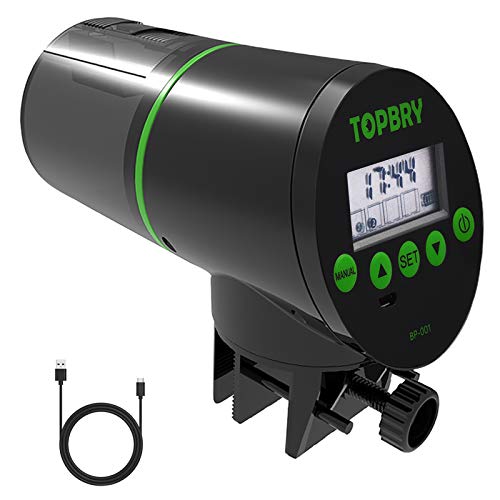
USB recharging gives this TOPBRY feeder a more modern feel than the battery-only models in this list. The built-in lithium battery is the main draw, because it supports a long stretch between charges and trims down the chore of replacing cells.
That makes it a sensible fit for a regular home tank where you want steady feeding without babysitting the power source. The honest read is that digital controls suit some setups better than others, so you’ll appreciate it most once your routine is already set.
What We Like
- USB recharging removes the hassle of constant battery swaps.
- Built-in lithium battery supports long use between charges.
- Digital format works well for set routines in a home aquarium.
- Cleaner power setup can be handy in tanks placed near outlets.
Softer Spots
- Digital controls can feel more involved than a simple dial or button layout.
- You still need to keep an eye on charge timing during long absences.
Core Details
Made For
This suits routine aquarium care in a home setting, especially for someone who wants rechargeable power instead of a battery-only feeder.
Another Choice May Suit
EHEIM TWIN Automatic Feeder is the better match for fish keepers who want dual-compartment feeding rather than a single streamlined dispenser.
The Papettly feeder brings more control than the first two picks, and that extra structure helps in tanks with varied food needs. Its 15 compartments and LCD display point toward a more deliberate setup, which can be useful for vacations or weekend trips.
One practical note stands out, though, because the source says it does not suit flake food or shrimp food. That makes it better for owners already using compatible food formats and looking for more scheduling flexibility.
Bright Spots
- 15 compartments give you more room for organizing feeding portions.
- LCD display makes the setup feel more guided than a basic timer unit.
- Up to 3 portions per feeding helps with finer control.
- USB cable included, so powering the unit is less of a guessing game.
- Includes a feeding spoon, which helps during setup and refills.
Areas To Watch
- Not suited to flake or shrimp food, so food choice matters here.
- More compartments can mean more to keep track of during refills.
Technical Sheet
Whose Shelf It Belongs On
This is a strong match for structured aquarium routines, especially when you want more control over portions than a bare-bones dispenser offers.
Where A Sibling Pick Shines
Pawfly Automatic Fish Feeder for Aquarium 60 ml is easier to consider for smaller tanks that need a simpler vacation helper.
Pawfly keeps the package compact, which matters more than it sounds when your tank sits on a crowded stand or shelf. The 60 mL chamber and the stated 5 to 20 gallon fit make it easy to match with smaller household aquariums.
Compared with the more feature-loaded Papettly unit, this one feels more like a direct vacation helper than a control hub. That stripped-down approach is often enough for short absences, and it keeps daily handling simple.
What We Like
- 60 mL capacity gives you enough room for short trips.
- Compact 3 x 3.9 x 4.5 inch sizing suits tighter spaces.
- Designed for 5 to 20 gallon tanks, which covers many common home setups.
- Battery operation keeps the feeder independent from a nearby outlet.
Worth Noting
- Battery is not included, so you’ll need to plan that part separately.
- Smaller size is great for compact tanks, but it is less suited to larger setups.
- Best matched to pellets and strips, so food fit still needs checking.
At A Glance
The Right Fit
This suits smaller aquariums and short trips where you want a simple feeder that does not take over the tank area.
Skip It When
FISHNOSH Automatic Fish Feeder for Aquarium Model-ML makes more sense for broader setups that include ponds or larger aquarium layouts.
EHEIM’s twin-hopper setup separates it from the simpler single-chamber feeders in this roundup. That design gives you more room to manage different food types or feeding routines, which is handy in tanks with more than one fish profile.
The battery-operated format keeps the installation clean, but the stronger appeal is really the dual-dispensing approach. For committed hobbyists, that extra control can feel like a steadier fit than the lighter-duty options earlier in the list.
Reasons To Buy
- Dual feeder design supports more than one food stream.
- Battery operation keeps the setup free from cords.
- Useful for aquariums with more varied feeding routines.
- Higher-end format feels suited to long-term aquarium care.
Small Caveats
- More specialized than the simpler single-hopper models.
- Battery dependence means power planning still matters.
Core Details
Who Should Grab It
This suits established aquarium keepers who want more than a basic timer and prefer a dual-feeder design.
Look Elsewhere When
TOPBRY Automatic Fish Feeders is the simpler match for anyone who wants rechargeable power without stepping up to a twin-hopper format.
AquaMiracle leans into simple timing, and that makes it easy to understand at a glance. The button-based schedule with 8, 12, or 24 hour intervals avoids the fussier screen-heavy approach some shoppers prefer to skip.
There’s also a manual button, so you can trigger feeding outside the fixed schedule without reworking the whole setup. That combination fits neatly into a regular home routine, especially for tanks that need consistency without much menu digging.
Upsides
- Three interval choices keep scheduling straightforward.
- Button-based setup feels less intimidating than screen-heavy controls.
- Manual feed button adds quick one-off feeding control.
- Volume adjustment helps you fine-tune output to the tank.
Points To Note
- Simple controls are easy to learn, but they may feel basic for advanced routines.
- Volume adjustment still calls for a little attention during setup.
Details At A Glance
Built With In Mind
This is a comfortable fit for home aquariums where you want simple timing and occasional manual control without a steep learning curve.
Reach For A Different Pick When
Papettly Automatic Fish Feeder for Aquarium suits you better when compartment count and LCD feedback matter more than a button-first layout.
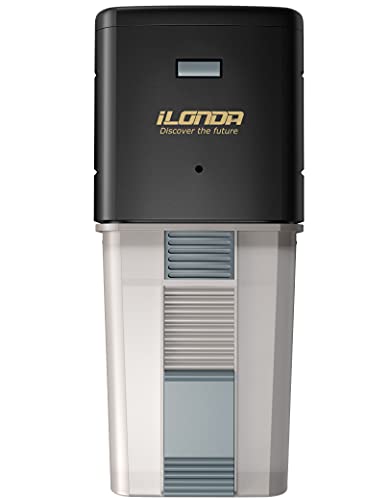
This LONDAFISH model stands out for its manual and automatic modes, which gives you a little more control than the more stripped-down feeders above it. The adjustable discharge port and 360-degree rotation are useful details when you’re trying to line up output with the tank opening.
That makes it a good fit for setups where placement flexibility matters, especially when the aquarium edge or hood leaves limited room. The honest read is that the extra adjustability helps, but it also asks for a little more setup attention than a very basic feeder.
Best Bits
- Manual and automatic modes cover more feeding styles.
- Adjustable discharge port helps tailor the output.
- 360-degree rotation supports more flexible positioning.
- Useful for aquariums or fish tanks with awkward access points.
Room For Improvement
- More moving parts and adjustments can mean a bit more setup time.
- Extra flexibility is helpful, but simple users may prefer a plainer design.
Feature Rundown
Right Fit For
This suits hobbyists who want flexible positioning and like having both manual and timed feeding in one feeder.
Swap It Out When
FISHNOSH Automatic Fish Feeder for Aquarium Model-ML is the better match for broader use around ponds and larger aquarium layouts.
Model-ML is positioned as a more flexible feeder for 2026, and the listing’s mention of small tanks, larger aquariums, and ponds makes that clear. That wider placement range gives it a broader use case than the smaller, more tank-specific picks earlier in the list.
It’s the kind of feeder that may appeal to a setup changing over time, such as a hobbyist moving from a small aquarium to something larger. The trade-off is that a wider claim set can mean you’ll want to pay closer attention to your own tank dimensions and food format before settling on it.
Highlights
- Broader stated use range covers small tanks, large aquariums, and ponds.
- Timer-based dispensing keeps feeding on a set rhythm.
- Useful for hobbyists expecting their setup to change later.
- Feels more versatile than the tightly focused compact models.
Honest Caveats
- Broader positioning does not replace checking the fit for your exact tank.
- Large use claims can make careful setup more important than with a tiny feeder.
Core Details
The Right Fit
This suits a hobbyist who wants a broader-use feeder and expects the aquarium setup to grow or change over time.
Where Another Pick Suits Better
LONDAFISH Aquarium Fish Feeder 0.175L Capacity is a tighter fit for small tanks where footprint matters more than range.
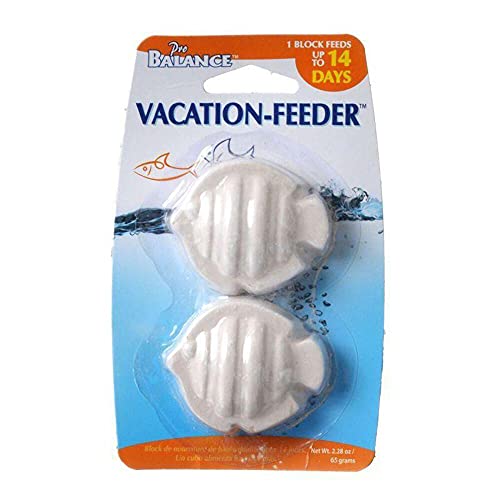
Penn Plax takes a very different route from the timer-style feeders above, because it leans into a simple vacation-feeding format instead of a programmable dispenser. The fish shape is a small visual touch, but the practical point is the 2.2 oz size, which suits short coverage needs.
That keeps it modest and easy to understand, although it won’t replace a timer feeder for anyone who wants repeated scheduled feedings. For short trips, though, the simplicity can be enough without adding another control panel to learn.
Positives
- Simple format keeps setup nearly effortless.
- 2.2 oz size works for short getaway coverage.
- Vacation style makes it easy to use in a pinch.
Minor Gripes
- It does not offer the programmable control of the timer-based feeders in this roundup.
- Best for short absences, not longer travel stretches.
Key Specs
Who Will Love This
This fits someone who wants a basic vacation helper and prefers a simple approach over programmable controls.
A Better Fit Elsewhere
AquaMiracle Automatic Fish Feeder for Aquarium suits you better when you want interval choices and manual control in one unit.
How To Choose The Right Automatic Fish Feeders For Aquarium
Match The Feeder To The Tank, Not The Other Way Around
Tank size is the first thing to settle because capacity and footprint shape the whole experience. A 0.175L feeder like the LONDAFISH compact model makes sense on a small betta tank, while a 60 mL chamber or larger layout matters more once the aquarium grows.
Placement matters too. A feeder that sits neatly on a 5 to 20 gallon tank can be a clean fit, while a broader-use design may deserve a little more checking around lids, rims, and hood clearance.
Think In Terms Of Food Type And Portion Control
Not every feeder handles the same food shape well, and that’s where many setups go sideways. Pellets, particles, flakes, strips, and granules each behave differently, so the feeder’s outlet and chamber design should match the food you already use.
More control helps in busy tanks or mixed routines. An LCD display, adjustable output, or multi-compartment layout can reduce guesswork, but the trade-off is a slightly more involved setup and a bit more routine cleaning.
Pick A Power Style That Fits Your Routine
Rechargeable power is convenient for regular use because it cuts down on disposable battery swaps. Battery-only models still make sense for simpler placements or spots where cords are awkward, especially on stands far from outlets.
Longer absences call for more attention to power planning. A feeder with a lithium battery or a clear battery-operated design can work well, but you still want a routine that leaves you comfortable before travel starts.
Choose Simplicity Or Flexibility With Purpose
Some setups benefit from a plain timer and a small body, while others need manual buttons, 360-degree rotation, or a twin-hopper layout. Simpler units are easier to live with, but flexible ones give you more room to tune feeding to the aquarium rather than forcing the tank to fit the feeder.
That’s the real decision point. Quiet, straightforward models suit beginners and smaller tanks, while hobbyists with varied feeding schedules usually get more value from the extra controls.
Things Worth Knowing First
Where Shoppers Go Wrong
The most common mistake is choosing a feeder by appearance instead of capacity and food compatibility. A small hopper can be perfect for a betta tank, yet frustrating on a larger setup that needs more room between refills.
Another miss is overlooking how the food behaves. Damp pellets, awkward flakes, or the wrong granule size can create clogs or messy dispensing, so the feeder should match the food you already keep on hand.
When Paying More Pays Off
Higher-tier feeders usually cost more because they give you extra control, better layouts, or more convenient power options. Dual hoppers, LCD feedback, USB recharging, and broader placement ranges are the kinds of features that tend to add cost.
That upgrade makes sense for longer trips, mixed feeding routines, or tanks where a basic timer feels too limited. For a small home aquarium with one simple food type, a plain compact feeder can still be the smarter fit.
Frequently Asked Questions
How do you choose the right feeder size?
Start with the tank size and how long you plan to be away. A compact feeder suits smaller aquariums, while larger chambers or broader-use designs make more sense for bigger setups.
Do all automatic feeders work with every fish food type?
No, and that’s worth checking before you order. Some units handle pellets, particles, or flakes, while others are more limited and work best with specific food shapes.
Is rechargeable power better than battery operation?
Rechargeable power is handy for regular use because it reduces battery swapping. Battery operation still works well for simple setups and places where a cord would get in the way.
Do timer feeders help on short vacations?
Yes, timer feeders are a practical fit for short trips and busy weeks. They keep feeding steadier than hand feeding alone, as long as the portions and food type are set up correctly.
What matters most for a beginner-friendly setup?
Simple controls and a clear food match matter most at the start. A feeder with a compact body and a straightforward timer is usually easier to live with than a complicated unit.
Final Thoughts
The right automatic feeder should make aquarium care feel steadier, not more complicated. Small tanks usually benefit from compact, low-fuss units, while larger or more varied setups lean toward rechargeable power, dual chambers, or adjustable output. Your best match is the one that fits your food type, tank size, and how often you’re actually away. Pick the simplest option that solves your real routine, and you’ll get more peace of mind with less tinkering.
