

Dog crates for home need to do more than hold a pet in place. They have to fit into daily life, whether that means doubling as an end table, rolling out of the way for cleaning, or folding up for travel and storage. The eight picks below cover furniture-style crates, heavy-duty indoor kennels, and portable options for smaller spaces and moving routines.
For apartments, family rooms, and busy entryways, the right crate helps you keep things orderly without turning the room into a kennel. The trade-off is simple: more furniture-like designs usually weigh more, while lighter travel styles give up some rigidity. That’s where the differences start to matter.
The Shortlist At A Glance

Feandrea Wooden Dog Crate Furniture 48 Inches
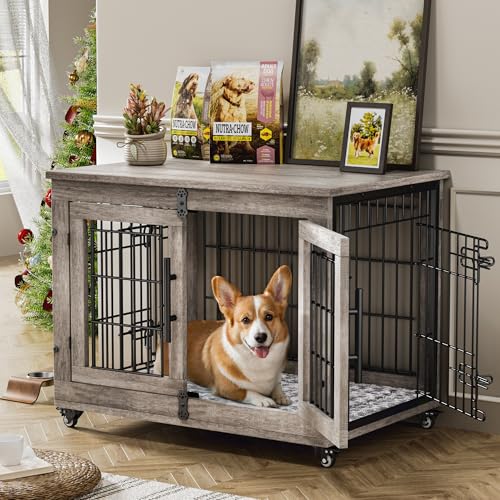
Lulive Medium Dog Crate Furniture 32” Grey

Fulhope Dog Crate Furniture 48" Rustic Brown

EasyCom Foldable Dog Crate Furniture Rustic Brown

MAHANCRIS Dog Crate Furniture 43.3" DCHR1201

docagt 48 Inch Heavy Duty Dog Crate Black

ZOMISIA 36 Inch Collapsible Dog Crate Grey

Siedihit Dog Playpen Portable Grey Small
More Details On Our Top Picks
A 48-inch wooden crate shifts the look from pet gear to furniture, which matters in living rooms that already feel crowded. Feandrea’s double-door layout gives you a little more flexibility for placement than a single-front entry, and the enclosed wood base should suit homes that want a cleaner visual line. The trade-off is weight and bulk, so this suits a fixed spot more than a room that changes weekly.
Compared with the lighter, foldable EasyCom pick later in the list, this one is built for a more permanent corner. For a large dog that needs an indoor den and a flat top for lamps, books, or décor, that combination makes sense. The honest read is that you’re paying for presence as much as containment.
Strong Points
- Furniture styling helps it blend into a home office or den.
- Double doors make placement easier along walls or beside a sofa.
- The 48-inch length gives a larger dog more room to settle.
- The enclosed base supports a tidier look than open-frame kennel styles.
Small Caveats
- Its size works better in a settled room than in a tight apartment nook.
- Wood surfaces need more care than a plain metal kennel.
- Assembly and repositioning are less convenient than with foldable options.
Feature Snapshot
Who It Suits Best
Large-dog households that want one crate to stay put in a main living area will get the most from this design.
Where A Sibling Pick Shines
Lulive’s 32-inch crate fits better for medium-sized dogs and compact rooms where you want the same furniture look with less footprint.
The Lulive option sits in a sweet spot for rooms that need furniture styling without the footprint of a 48-inch kennel. Its listed size options make it easier to match the crate to your dog and the room, and the wheels help more than you’d expect in a house where floors get cleaned often. That mix makes it practical for daily use, even though the smaller format naturally leaves less open space than the larger Feandrea pick.
The cushion matters too, because a crate that looks good but feels bare tends to gather add-on purchases fast. In a medium living room or den, this one gives you a finished look without pushing the room into pet-zone territory. You may find the wheel feature especially useful in homes with hard floors and a fixed feeding corner.
Upsides
- Multiple size options help you match the crate to the room and dog.
- Wheels make repositioning easier during cleaning or furniture changes.
- Double doors give you more freedom with entry direction.
- The included cushion improves everyday comfort without extra setup.
Points To Note
- The smaller footprint is easier to place, but it leaves less interior room than the 48-inch designs.
- Wheels help mobility, though they add another part to maintain over time.
- The grey furniture look suits neutral rooms more than warm rustic décor.
Core Details
The Right Fit
Medium-sized dogs in homes that need a movable, furniture-style crate will benefit most here.
Another Choice May Suit
Feandrea’s 48-inch crate suits larger dogs and anyone who wants a more substantial furniture presence in the room.
Fulhope leans hard into the end-table idea, and the three drawers make that clearer than most furniture crates in this group. That matters in homes where every surface has to earn its keep, because storage for leashes, grooming tools, and spare liners saves you from scattering pet gear across the room. Compared with the Feandrea crate, this one looks more like storage furniture first and kennel second.
The 48 by 28 by 36 inch footprint is substantial, so you’ll want room for it before it becomes part of the décor. The steel tubes should appeal to shoppers who want a sturdier visual build than the lighter decorative crates on the list. For a large-breed household that wants one piece to do several jobs, that’s a strong argument.
Highlights
- Three drawers add real storage for everyday dog items.
- The large footprint suits a bigger indoor setup.
- Steel tube framing gives the piece a more substantial feel.
- It can work as an end table, which helps in shared living spaces.
- The rustic brown finish blends with warm wood tones.
Areas To Watch
- The drawers add useful storage, but they also add cleaning and organization to manage.
- Its size can dominate a smaller room.
- The furniture-first look is a better match for steady placement than frequent moving.
Technical Sheet
Whose Shelf It Belongs On
This suits a large-dog home that wants storage and kennel space in one room-friendly piece.
Skip It When
Lulive’s smaller crate makes more sense in tighter homes where drawers are less important than a lighter footprint.
EasyCom changes the pace by focusing on foldability instead of permanent furniture presence. The no-assembly angle will appeal to anyone who wants a faster setup, and the included adjustable bowls plus name tag make the crate feel more complete out of the box. For a condo, guest room, or multi-use space, that flexibility lands better than a heavier cabinet-style crate.
Its listed footprint is smaller than the larger wooden models, so it’s easier to tuck into a corner or shift for cleaning. The trade-off is obvious, though, because foldable convenience usually means less of the solid furniture look that Feandrea and Fulhope bring. Still, for everyday indoor use with a medium to large dog, it’s a smart compromise.
Reasons To Buy
- Foldable design helps with storage and temporary room changes.
- No assembly keeps setup simple for a first-time crate owner.
- Adjustable bowls and a name tag reduce extra accessory shopping.
- Rustic brown styling keeps the look closer to home furniture.
Softer Spots
- The lighter structure won’t feel as substantial as the heavy-duty wooden crates.
- Foldable designs usually suit occasional repositioning more than permanent display.
- The smaller size may feel tighter for dogs near the upper end of the weight range.
Details At A Glance
Best Suited To
Shoppers who want a quick setup and easier storage will get the most value from this one.
Look Elsewhere When
Feandrea’s 48-inch crate suits homes that want a heavier, more permanent furniture piece.
MAHANCRIS stands out because the removable divider changes the crate’s job. You can use it as a dual space for two smaller dogs, or open it up differently depending on how your home is set up that month. That flexibility matters in busy households, and it separates this model from the more single-purpose furniture crates above.
The 43.3-inch length keeps it large enough to matter without jumping all the way to the biggest crate in the list. It feels suited to homes that foster, rotate pets, or need a second indoor zone for one dog without buying a second unit. The honest read is that the divider is the main reason to choose it, not the décor alone.
Best Bits
- Removable divider gives you two placement options in one crate.
- The 43.3-inch size sits between medium and full-size furniture crates.
- Useful for homes managing two small dogs or changing routines.
- Rustic brown styling keeps it close to standard living-room furniture.
Worth Noting
- The divider adds flexibility, but it also adds another part to manage.
- It suits households with a clear plan for the space, not last-minute rearranging.
- Because the source data is light on extras, the divider does most of the work here.
Feature Card
Perfect Match For
Two-dog homes and flexible indoor setups are where this crate makes the most sense.
Reach For A Different Pick When
Fulhope’s 48-inch crate is better for shoppers who want built-in storage drawers instead of a divider.
This one leans toward utility first, which is a useful contrast after the furniture-style picks. The dual-door design and rolling casters point toward easier handling in a house where the crate gets moved for vacuuming, cleaning, or room changes. Unlike the wood-look options, the black frame is about structure and access rather than décor.
The removable tray makes cleanup simpler, and that matters in everyday indoor use more than most product pages admit. You also get a larger 48-inch format, so it sits in the same size conversation as Feandrea and Fulhope, but with a more industrial look. For households that want a sturdier visual profile, it has a straightforward appeal.
Bright Spots
- Rolling casters make it easier to shift the crate for cleaning.
- Dual doors give you more placement options in a room.
- The removable tray simplifies routine cleanup.
- Large 48-inch size suits bigger indoor dog setups.
Room For Improvement
- The industrial look suits utility-focused homes more than décor-heavy rooms.
- Moving parts like casters and trays add maintenance over time.
- It offers function first, so it won’t blend in like a wood-finish crate.
Quick Facts
Built With In Mind
Homes that need a sturdy indoor crate with easier cleaning and movement will get the most from this design.
Swap It Out When
Feandrea’s wooden crate is the better fit for a living room that needs a more furniture-like finish.
ZOMISIA changes the category from hard furniture to travel-friendly containment, and that shift is the whole point. A soft-sided, collapsible crate works best for road trips, short stays, or homes that need a secondary setup without committing floor space all week. Compared with the wooden and metal models above, this one is about portability and speed.
The breathable mesh windows and built-in leash suit dogs that do better with visibility and lighter structure. Plush padding adds comfort, though soft-sided designs usually ask for a little more care around claws and rough play. In a temporary indoor-outdoor routine, it feels well judged.
Positives
- Collapsible construction makes storage easier between trips.
- Mesh windows improve airflow and visibility from multiple sides.
- The built-in leash adds a useful safety detail for travel stops.
- Plush padding improves comfort for short stays and errands.
- Grey coloring keeps the look simple and neutral.
Minor Gripes
- Soft-sided construction is less suited to rough indoor chewing than hard-frame crates.
- It makes more sense for travel and temporary use than full-time containment.
- Cloth surfaces need more frequent cleaning than smooth wood or metal.
Spec Overview
Who Will Love This
Travel-heavy households and dogs that need a portable indoor-outdoor kennel will appreciate this format most.
Where Shoppers Go Wrong
Heavier indoor-duty shoppers should look to docagt or Feandrea instead, because those crates are built for a more permanent spot.
Siedihit sits at the lightest end of the list, and that makes it useful for errands, camping, or a temporary indoor pen. The thick mesh and washable Oxford cloth give you a practical material mix, while the 360-degree view helps you keep an eye on a pet without constantly opening the enclosure. It feels closer to a portable pen than a traditional crate, which is exactly the point.
The carrying case and foldable layout make it easy to stash in a trunk or closet, and that convenience is hard to ignore in compact homes. Compared with ZOMISIA’s soft-sided crate, this one leans more toward a playpen-style setup for small animals and small dogs. For short, supervised use, it’s a tidy solution.
Positives
- Mesh and Oxford cloth give it a practical, washable build.
- 360-degree visibility helps you monitor a pet from any angle.
- The foldable design and case support travel and storage.
- Works well indoors, outdoors, and in vehicle cargo areas.
Areas To Watch
- The playpen format suits supervised use more than secure long-term containment.
- Small size makes it better for petite pets than larger dogs.
- Fabric construction needs more upkeep than hard-sided crates.
Core Details
Right Fit For
Small pets, camping setups, and short supervised containment needs are where this pen makes sense.
Where Another Pick Suits Better
ZOMISIA’s collapsible crate is the better fit for shoppers who want a softer-sided travel crate with a more enclosed feel.
How To Choose The Right Dog Crates For Home
Size, Shape, And Room Layout
Crate length and height matter more than most people expect, because a crate that fits the dog but not the room becomes awkward fast. A 48-inch furniture crate works in a den or open-plan living room, while a 32-inch unit suits tighter spaces and secondary corners.
Placement matters too. Double doors help with wall alignment, and lower-profile crates sit more naturally beside sofas or side tables.
Material And Daily Care
Wood-look crates bring a warmer look, but they ask for more attention during cleaning and moving. Metal frames and removable trays are easier for routine upkeep, while soft-sided fabric models need gentler handling and more regular washing.
Think about the floor beneath it as well. Wheels help on hard flooring, foldable frames help in homes with limited storage, and heavier furniture-style crates work best where the unit will stay put.
Use Case Comes First
A crate for a large indoor dog is a different purchase from a travel crate or playpen. Furniture models fit shared living spaces, collapsible designs suit road trips and guest stays, and playpens make sense for supervised temporary use.
The right match depends on how often the crate moves. Daily use in one room points toward sturdier builds, while weekend transport points toward lighter, softer construction.
Details That Change Ownership
Storage, access, and cleaning shape how pleasant a crate feels after the first week. Drawers, cushions, built-in bowls, and removable trays all change the day-to-day rhythm, and each one adds either convenience or another part to maintain.
That’s why the smartest choice is rarely the biggest crate on the page. It’s the one that fits your dog, your room, and the way you already keep house.
Things Worth Knowing First
Common Shopping Slip Ups
One common mistake is focusing on length alone and ignoring how much floor space a crate really occupies. Another is choosing a decorative model for a dog that still leans hard on the bars or pushes on doors.
Storage is another blind spot. A foldable design helps in small homes, while a heavier furniture crate makes more sense only when you have a stable spot for it.
The Upgrade Payoff
Higher-tier crates usually spend more on materials, structure, and extras like drawers, wheels, or removable dividers. That added cost shows up in easier cleaning, better room integration, and more flexible day-to-day use.
It’s worth paying up when the crate stays in view every day or serves more than one purpose. A storage-friendly furniture crate or a sturdy dual-door design can save you from replacing a plain basic model later.
Frequently Asked Questions
What Size Crate Works Best At Home?
The right size leaves enough room for standing, turning, and settling without wasting floor space. For larger dogs, the 48-inch options here give you more room to work with.
Are Furniture-Style Crates Harder To Maintain?
They usually need more care than plain metal frames because wood-like surfaces show wear more easily. They also reward you with a cleaner look in main living areas.
Do Foldable Crates Suit Everyday Use?
They can, especially in smaller homes or rooms that change often. The trade-off is usually less visual heft than a fixed wooden crate.
What Matters Most For Two Dogs?
A divider gives you more control over spacing and routine. The MAHANCRIS crate is the clearest fit in this roundup for that setup.
Are Soft-Sided Crates Good For Travel?
Yes, because they pack down easily and take up less room in a car or closet. They work best for calmer pets and supervised use.
Closing Thoughts
The right dog crates for home solve two problems at once, they support your dog and keep the room looking intentional. Furniture-style models suit households that want the crate to live in the room, while foldable and soft-sided options fit travel, storage, and temporary use better. Match the crate to your floor plan, your cleaning routine, and how much movement the unit will see. That way, the crate feels like part of the house, not another thing to work around.