
Six-week-old puppies need food that fits their stage, not just their size. That usually means milk replacers, soft wet meals, or gentle dry recipes that are easy to moisten and portion. The right pick can make feeding less chaotic in a busy kitchen and a lot less stressful for a new puppy routine.
Some pups need a formula meant for newborns through six weeks, while others are already ready for small-breed puppy food with softer textures. You’ll see both ends of that range here, so you can match the food to the pup’s age, size, and digestion needs without guessing.
The Shortlist At A Glance

Pet-Ag Goat’s Milk Esbilac Liquid 11 oz Ready-to-Feed Puppy Formula

ROYAL CANIN X-Small Puppy Thin Slices in Gravy 3 oz Pack of 12

Pet-Ag PetLac Liquid for Puppies 32 oz Ready-to-Feed Milk Replacement
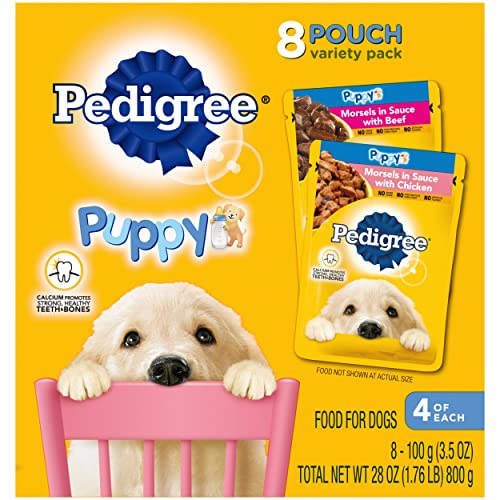
Pedigree Puppy Soft Wet Dog Food 8-Count Variety Pack 3.5 Oz Pouches

Nutro Ultra High Protein Puppy Dry Dog Food Chicken Lamb Salmon 3.5 lb

Nutrish Puppy Dry Dog Food Chicken Brown Rice 5 lb Bag

A Strong Heart Wet Puppy Food Chicken Beef Dinner 5.5 oz Cans Pack of 24
More Details On Our Top Picks
This ready-to-feed liquid sits closest to a newborn care routine, so it suits puppies that need a milk replacement rather than a bowl meal. The goat milk base matters for small stomachs that struggle with heavier textures, and the added vitamins, minerals, and trace nutrients give it a more complete profile than a plain supplement.
For a six-week-old puppy still moving toward solids, the convenience is obvious, but the trade-off is that liquid feeding asks for more careful handling and refrigeration after opening. It’s a strong fit for hand-rearing situations, and it’s less useful once the pup is clearly ready for thicker wet food or softened kibble.
What We Like
- Ready-to-feed format saves mixing time.
- Goat milk protein is gentle by design.
- Works well for very young puppies.
- Fits sensitive digestion scenarios better than denser meals.
Points To Note
- Refrigeration after opening adds a storage step.
- Liquid feeding is less convenient than dry food for travel.
- Not the right step once a puppy is fully onto solids.
Feature Snapshot
Who It Suits Best
Hand-rearing setups and newborn-to-six-week puppies with sensitive digestion benefit most here.
A Better Fit Elsewhere
ROYAL CANIN X-Small Puppy Thin Slices in Gravy fits a small-breed pup that’s already ready for soft wet food and needs a more traditional meal texture.
This one is built around extra-small puppies, so the sizing line matters as much as the food itself. Thin slices in gravy make it easier for tiny mouths to manage, and the prebiotics plus digestible proteins point it toward puppies that need steady stool-friendly support without a harsh texture.
The age window reaches beyond six weeks, which gives you room as the puppy grows, and the DHA adds a brain-development angle that many new households appreciate. The honest trade-off is that it’s very size-specific, so bigger breeds or older pups usually need a different texture and portion style.
Highlights
- Soft slices are easy for small mouths.
- Prebiotics support a steadier digestive routine.
- DHA adds useful early-life support.
- Package size works for repeated feeding cycles.
Areas To Watch
- Built for extra-small breeds, not broad puppy use.
- Wet-food handling means leftovers need prompt storage.
- Texture may feel too soft for pups already moving toward firmer meals.
Core Details
Made For
Extra-small breed puppies that need soft, easy-to-manage wet food will get the most from it.
Where A Sibling Pick Shines
Pedigree Puppy Soft Wet Dog Food 8-Count Variety Pack is a looser fit for households that want a more general wet-food option rather than a breed-specific recipe.
PetLac leans practical, especially for orphaned, rejected, nursing, or weaning puppies that need a ready source of nourishment. The milk-and-vegetable-protein blend gives it a broader role than a single-stage supplement, and the resealable Tetra Pak is handy when you’re managing more than one pup.
The 32-ounce size makes more sense in a household with repeated feedings, yet it also means you’ll want to respect storage instructions once the carton is opened. Compared with Pet-Ag Goat’s Milk Esbilac Liquid, this version is less about sensitive-digestive tailoring and more about all-purpose feeding support.
Strong Points
- Ready-to-feed format reduces prep work.
- Useful for several puppy care scenarios.
- Resealable carton suits multi-puppy households.
- Highly palatable profile helps with acceptance.
Small Caveats
- Opened liquid needs refrigerator space.
- Not as narrowly tailored as a goat-milk formula.
- Carton format is less travel-friendly than dry food.
Technical Sheet
Whose Shelf It Belongs On
Newborn, orphaned, or transitioning puppies in homes that need a practical liquid formula fit this product best.
Swap It Out When
Pet-Ag Goat’s Milk Esbilac Liquid is the more targeted choice for puppies with especially sensitive digestion.
This soft wet pack is built for flexibility, which helps in homes that use the same food as a meal, a topper, or a mix-in with dry puppy food. Real chicken or beef gives it familiar flavor cues, and the absence of added sugar, corn syrup, and artificial flavors keeps the ingredient story straightforward.
For a six-week-old puppy, the soft texture can be easier than dry food alone, especially during the shift toward fuller meals. The trade-off is that wet food brings more opening-and-storing work, so this suits people who don’t mind a little extra kitchen rhythm.
Positives
- Soft texture suits early chewing stages.
- Can work as a topper or main meal.
- Uses real chicken or beef for flavor.
- No added sugar or corn syrup.
- Easy to portion in small servings.
Worth Noting
- Wet pouches need prompt refrigeration after opening.
- Pack format creates more waste than a dry bag.
- Less targeted than breed-specific puppy formulas.
Details At A Glance
Right Fit For
Households that want a flexible wet food for a puppy easing into solids will get the most from it.
Look Elsewhere When
ROYAL CANIN X-Small Puppy Thin Slices in Gravy makes more sense for extra-small breeds that need a more tailored texture and formula.
Nutro Ultra leans toward a more detailed dry-food formula, with a protein trio of chicken, lamb, and salmon. That gives you a different lane from the liquid options above, and the non-GMO ingredient profile, omega 3 and 6 fatty acids, and DHA make it a thoughtful match for owners building a fuller puppy feeding plan.
It’s also the first dry pick here that clearly speaks to skin, coat, brain, and eye support all at once. The catch is simple, though, dry kibble at six weeks often needs softening, so it fits best for puppies already moving toward textured meals or for mixed feeding routines.
Upsides
- Multiple animal proteins add variety.
- Omega 3 and 6 support coat care.
- DHA helps cover early development needs.
- Non-GMO recipe keeps the formula focused.
- Dry format stores more easily than wet food.
Room For Improvement
- Very young pups may need the kibble softened.
- 3.5-pound bag is modest for bigger households.
- More detailed recipe may be unnecessary for very simple feeding plans.
Core Details
Best Suited To
Families starting a dry-food routine with a puppy that tolerates softened kibble will find this useful.
Another Choice May Suit
Pedigree Puppy Soft Wet Dog Food 8-Count Variety Pack is the easier route for a pup that still needs a gentler wet texture.
Nutrish keeps the recipe straightforward, with real chicken as the first ingredient and brown rice as a familiar grain base. That simplicity helps in homes that want a plain, readable dry food, and the DHA plus EPA pair supports brain development and vision as puppies grow.
The formula is veterinarian reviewed, which gives it a more structured positioning than a bare-bones kibble. Still, dry food at six weeks often needs moisture added, so this is better for puppies already nibbling or for households comfortable softening each serving.
Bright Spots
- Real chicken leads the ingredient list.
- DHA and EPA support early development.
- No artificial flavors.
- Dry bag format is easy to store.
- Good fit for mixed feeding setups.
Softer Spots
- May need soaking for very young puppies.
- Less texture variety than wet options.
- Not as specialized as breed-targeted formulas.
Feature Rundown
The Right Fit
Puppies that are starting to accept dry food, especially in homes that like a simple ingredient profile, fit this bag well.
Skip It When
Pet-Ag Goat’s Milk Esbilac Liquid is the better answer for a puppy still relying on milk replacement rather than kibble.
This one is built for households that go through wet food often, because the 24-can format gives you a larger pantry-style supply. The chicken and beef blend is straightforward, and the recipe’s focus on muscle support makes sense for puppies that need a hearty wet meal rather than a delicate starter formula.
It sits farther from the newborn milk replacers than Pet-Ag’s options, so it suits pups that are already on solid or near-solid feeding patterns. In most homes, that means it’s a later-step wet food, not the first stop in the weaning process.
Best Bits
- Large count works for frequent feeding.
- Wet texture suits growing puppies.
- Chicken and beef provide familiar flavors.
- Good fit for homes with multiple dogs in similar stages.
Honest Caveats
- Wet cans take up more storage space.
- Less appropriate for newborn milk replacement.
- Bulk format is more than some small households need.
Feature Card
Built With In Mind
Households feeding wet puppy food regularly, especially after the earliest milk stage, will get the most from this format.
Reach For A Different Pick When
ROYAL CANIN X-Small Puppy Thin Slices in Gravy is the more precise option for extra-small breeds that need a narrower age and size fit.
How To Choose The Right Dog Foods For 6 Weeks Old Puppy
Texture And Stage Matter Most
At six weeks, the main question is whether the puppy still needs milk replacement or can manage soft food. A liquid formula serves newborns and fragile feeders, while thin gravy, soft wet pouches, or moistened kibble suit pups that are already taking real meals.
That stage split matters more than brand polish. A food that looks advanced on paper can still be the wrong texture for a tiny mouth.
Match The Food To The Breed Size
Extra-small breed formulas usually have smaller bites, softer textures, or more precise nutrient framing. That kind of tailoring helps in a small apartment or any home where meals need to be tidy and easy to portion.
Larger puppy formulas can still work, but the fit is looser. For very small pups, a breed-specific wet food often feels more practical than a broad all-breed recipe.
Look Beyond The Front Label
Protein source, digestibility support, and developmental nutrients matter more than flashy wording. DHA, prebiotics, and complete balanced nutrition all have different jobs, so it helps to read each formula as a set of tools rather than a single promise.
You also want packaging that suits your routine. Single pouches, cartons, and bags each change how much cleanup, refrigeration, and portion control you’ll face.
Think About Your Daily Routine
A liquid milk replacer is useful for hand-feeding, but it asks for more prep discipline. Dry food is easier to store and measure, though very young pups often need it softened before serving.
Wet food sits in the middle and often feels simplest for busy homes. It’s a little like picking the right key for a lock, the form has to match the pup’s stage before anything else matters.
Things Worth Knowing First
Common Shopping Slip Ups
The easiest mistake is choosing by puppy label alone. Six weeks old can still mean very different feeding needs, especially for a toy-breed pup versus a pup that is already nibbling soft food.
Another common miss is ignoring storage needs. Wet pouches, cartons, and ready-to-feed liquids all ask for more attention after opening than a dry bag does.
The Upgrade Payoff
Higher-tier puppy foods often cost more because they bring tighter recipe design, more specific age or breed targeting, and added support nutrients such as DHA or prebiotics. You’re also paying for easier handling in some cases, like ready-to-feed liquids or pre-portioned wet meals.
That extra spend makes sense in newborn care, sensitive digestion setups, or households that want less guesswork. For a puppy already doing well on a simple dry recipe, the jump may not add much value.
Frequently Asked Questions
Can a six-week-old puppy eat dry food?
Yes, but dry food usually needs to be softened with warm water or used as part of a mixed-feeding routine. Very young puppies often manage wet or liquid food more easily.
Is milk replacement still useful at six weeks?
It can be, especially for puppies that are small, weak, orphaned, or not fully weaned. Once the puppy is reliably eating solids, the role of milk replacement usually shrinks.
Should you choose breed-specific puppy food?
Breed-specific food helps more when the puppy is extra small or has very particular size needs. For broader use, a general puppy formula can still work well.
What nutrients matter most at this age?
Look for complete nutrition, easy digestibility, and developmental support such as DHA. Prebiotics and quality protein sources also help shape a steadier feeding routine.
Is wet food better than dry food for young puppies?
Wet food is often easier for tiny mouths and early weaning. Dry food can still fit, but it usually works better once softened or introduced gradually.
Closing Remarks
You’re choosing between feeding stages, not just brands, and that’s the right way to shop for a six-week-old puppy. Liquid formulas make sense for the youngest or most delicate pups, while soft wet meals and softened dry food suit puppies that are already past the earliest milk phase. Pick the texture that matches the pup in front of you, and the rest of the decision gets a lot simpler.