
Multi-cat homes run smoother when meals stop turning into a race. Collar-activated feeders help you separate diets, slow down food theft, and keep one pet from turning dinner into a raid. That matters most in busy kitchens, small apartments, and homes where one cat eats slowly while another hovers like a shadow.
The seven picks below focus on real household use: timed feeding, selective access, camera monitoring, wet-food cooling, and collar-based recognition. You’ll see which models suit mixed diets, travel-heavy routines, and homes that need a calmer feeding setup.
The Shortlist At A Glance

Sarpaws FW1 Automatic Cat Feeder and Water Dispenser
Closer Pets MiBowl Automatic Selective Microchip Feeder

oneisall Automatic Cat Feeder with Camera for 2 Cats Pets 20 Cups/5L
Bsemax Automatic Wet Food Cat Feeder

HoneyGuaridan Automatic Cat Feeder for 2 Cats
HEAPETS RFID Automatic Cat Feeder with Collar Sensor
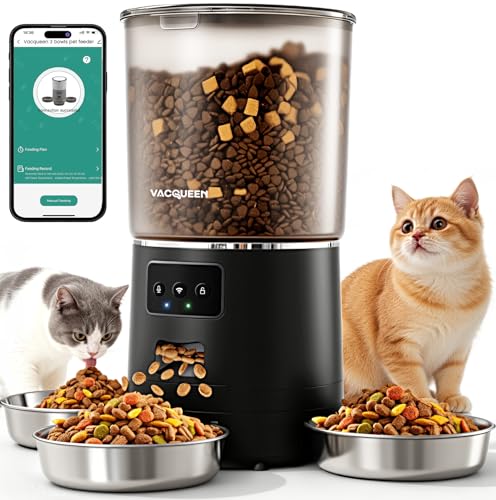
Vacqueen Automatic Cat Feeder for 3 Cats with WiFi Control 6L
More Details On Our Top Picks
The Sarpaws FW1 makes sense for homes that want feeding and hydration handled in one footprint. A locking lid helps keep the food chamber closed, while the desiccant bag adds dryness support for kibble storage, which matters in warm kitchens and humid apartments.
It also brings programmable portions, four meals per day, and a 10-second voice recording, so the routine feels more personal than a plain timer feeder. The trade-off is that a combined feeder-water dispenser usually asks for more counter space and a bit more upkeep, so it suits tidy setups better than cluttered corners.
Strong Points
- Food and water live in one unit, which saves space on a crowded floor or laundry-room shelf.
- Programmable portions help you keep mealtimes steady for cats that do better with routine.
- Four daily meals work well for households that spread food across the day instead of serving one large bowl.
- The voice recorder adds a familiar cue that can ease the shift from hand feeding to automation.
Things To Consider
- Combined units usually need more regular cleaning, especially around the water side.
- The locking lid is helpful, yet it still asks for a snug placement where curious paws cannot nudge the base around.
- Battery or wired use gives flexibility, though cable or battery management becomes part of the routine.
Feature Rundown
Who It Suits Best
You’ll get the most from this pick in a home that wants one compact station for both kibble and water, especially with a steady indoor routine.
A Better Fit Elsewhere
Closer Pets MiBowl Automatic Selective Microchip Feeder is the stronger match for homes where one cat keeps stealing another cat’s food.
Selective access is the whole point here, and that makes the MiBowl feel especially useful in homes where one pet eats too fast or likes to wander. The microchip-based design narrows access to the cat that’s meant to eat, which helps protect special diets and calmer mealtimes.
Compared with the Sarpaws FW1, this one is less about convenience extras and more about control. It’s a good fit for small dogs and cats living together, though you’ll want to keep the feeding area clean and make sure the pet’s chip or collar setup matches the feeder’s access logic.
What We Like
- Selective access helps keep the wrong pet out of the bowl.
- The microchip approach is useful for homes managing separate diets.
- It reduces food theft in shared feeding areas, which can calm a tense routine.
Worth Noting
- Setup matters more here than on a plain timer feeder, so the first pass takes some attention.
- Pets without compatible identification may need another arrangement.
- Selective feeders can be a little more sensitive to how the pet approaches the bowl.
Core Details
Who Should Grab It
You’ll appreciate this most in a multi-pet home where one animal needs protected meals and another tends to hover nearby.
Swap It Out When
HoneyGuaridan Automatic Cat Feeder for 2 Cats is the better fit for two-cat homes that want app control and paired bowls instead of chip-based access.
For households that like seeing what’s happening at mealtime, this oneisall adds a camera to the feeder. The 5G Wi-Fi support, dual cameras, HD night vision, and two-way audio turn it into a more connected setup, especially for you who travel often or want to check in between errands.
Compared with the simpler MiBowl, this model is more about visibility and remote control than selective access. Motion alerts, feeding logs, and the feed-now function make it useful for everyday oversight, though the added tech also means you’ll want solid network coverage and a little patience during setup.
Highlights
- The camera gives you a visual check on feeding time and bowl use.
- Feeding logs help you track routine without guessing.
- Two-way audio lets you speak to your cats from afar.
- Night vision supports late check-ins in dim rooms.
- Motion alerts add a little extra awareness around the feeder area.
Small Caveats
- More features mean more setup steps than a basic dispenser.
- App-based controls depend on a stable home network.
- Camera-heavy units usually feel best in a fixed indoor spot, not a moved-around corner.
Technical Sheet
Best Suited To
You’ll like this most if you want a feeder that doubles as a remote window into daily feeding, especially in a home with two cats and a busy schedule.
Look Elsewhere When
Vacqueen Automatic Cat Feeder for 3 Cats with WiFi Control is the smarter match for larger multi-cat setups that care more about capacity than camera features.
Wet-food feeding needs a different kind of setup, and this Bsemax model answers that with refrigerated storage support and two ice packs. That matters in homes where pâté or other moist meals sit out too long, because freshness and timing become more important than a big kibble hopper.
It serves up to four timed meals, so it works for structured routines and portioned wet-food feeding. The honest read is that wet-food units ask for more cleaning than dry dispensers, yet this one suits cat households that already plan around mealtime rather than leaving food out all day.
Upsides
- Refrigerated support helps wet meals stay in a more controlled serving environment.
- Four meal timing slots fit daily routines that use smaller portions.
- Two ice packs add another layer of cooling support for planned feeding windows.
- It’s a strong match for cats that prefer wet textures over dry kibble.
Areas To Watch
- Wet-food equipment usually needs more cleanup after each cycle.
- Ice packs mean you’ll need a little freezer planning.
- This style works best in homes that keep a steady feeding rhythm.
At A Glance
The Right Fit
This is a good match for you if your cats eat wet food on a schedule and you want a more structured setup than a standard bowl.
Where A Sibling Pick Shines
HoneyGuaridan Automatic Cat Feeder for 2 Cats fits better for dry-food households that want app control and paired bowls instead of cooling hardware.
HoneyGuaridan leans into the practical side of two-cat feeding with WiFi app control, dual power, and a pair of stainless steel bowls. That combination makes it attractive for homes that want a cleaner feeding station with less guesswork and a steadier routine.
The slow-feeder anti-choking bowls are a notable touch, because they help stretch out mealtime for fast eaters without changing the whole feeding schedule. Compared with the camera-first oneisall, this model is more about direct feeding control and less about visual monitoring, which many households may find easier to live with.
Bright Spots
- Two stainless steel bowls suit paired feeding without awkward sharing.
- Slow-feeder bowls help pace quicker eaters at mealtime.
- App control adds convenience for busy mornings and late returns.
- Dual power support gives the setup a practical backup path.
Minor Gripes
- Two-cat systems still need space for a sensible feeder placement.
- App features can feel unnecessary for homes that only want basic timed dispensing.
- Stainless bowls are easy to remove, though they still need regular washing.
Details At A Glance
Made For
This works well for two-cat homes that want a cleaner, more orderly feeding station with app control and separate bowl space.
Another Choice May Suit
Sarpaws FW1 Automatic Cat Feeder and Water Dispenser is a better match for you if combining food and water in one unit matters more than twin bowls.
This HEAPETS feeder is built around RFID, which means radio-frequency identification, so the collar sensor decides which pet can open the food access. That makes it a smart fit for multi-pet homes where each cat needs its own bowl or diet zone, and it feels more targeted than the broader MiBowl approach.
The sealed lid is a useful touch for both wet and dry food, and the white finish should blend easily into a bright kitchen or utility area. You may find it especially helpful when one pet snacks too quickly, though the collar setup adds an extra layer of daily management.
Best Bits
- Collar sensing keeps food access tied to the right pet.
- Sealed-lid storage helps support fresher food between meals.
- It works with wet and dry food, which gives you more menu flexibility.
- It suits mixed-diet homes that need clearer separation at mealtime.
Points To Note
- Collar-based access means you’ll need to keep the sensor in regular use.
- Mixed food types can mean more cleaning depending on what you serve.
- Space planning matters, because selective feeders work best in a stable spot.
Core Details
Built With In Mind
You’ll get the most from this feeder in a home where one cat needs protected access and another cat keeps interfering with the bowl.
Reach For A Different Pick When
Closer Pets MiBowl Automatic Selective Microchip Feeder suits you better if you want selective access without relying on a collar sensor.
Vacqueen is the largest-feeling option here, and the 6L capacity gives it room for a three-cat routine without constant refilling. WiFi control, an anti-jam system, a dual-effect desiccant system, and a 10-second voice recorder make it feel built for households that want both convenience and food freshness support.
Compared with the HoneyGuaridan, this one leans more toward capacity and jam prevention than twin-bowl feeding. That makes it useful in busier homes, though the bigger footprint may feel a little much on a tight counter or in a narrow corner.
Standout Traits
- 6L capacity gives you more headroom between refills.
- Anti-jam design helps reduce common feeding snags.
- The dual-effect desiccant system supports drier kibble storage.
- WiFi control and voice recording add flexible day-to-day management.
Honest Caveats
- Larger capacity usually comes with a larger physical presence.
- WiFi features are most useful in homes that already like app control.
- A multi-cat feeder this size still needs a stable, easy-to-clean location.
Feature Card
Whose Shelf It Belongs On
This suits three-cat homes that want more capacity, remote control, and freshness support in one feeder.
Where Another Pick Suits Better
HoneyGuaridan Automatic Cat Feeder for 2 Cats is the easier fit for smaller two-cat setups that want paired bowls instead of larger capacity.
How To Choose The Right Collar Activated Cat Feeders For Multiple Cats
Match Access Method To The Problem
The first question is simple: are you trying to control timing, access, or both? A timer feeder works for structured meals, but collar or chip access matters more when one cat steals food, another needs a separate diet, or a small dog keeps visiting the bowl.
Capacity matters just as much. A 6L hopper or 20-cup tank helps in busier homes, while smaller, selective feeders make more sense when you want tighter control and less food sitting around.
Think About Food Type And Clean-Up
Dry-food feeders are easier to maintain, but wet-food models solve a different household problem. Wet food usually needs cooling support and more frequent cleaning, so the convenience trade-off is obvious even before you place an order.
Materials and bowls matter too. Stainless steel bowls tend to be easier to wash, while sealed lids and desiccant systems help keep dry food in better shape between meals.
Decide How Much Tech You’ll Actually Use
App control, feeding logs, cameras, and motion alerts sound appealing, but they only pay off when you’ll use them. A travel-heavy schedule or a cat that eats under supervision can justify those extras, while a simple routine may be happier with a plain timer and a voice recorder.
Power options deserve attention as well. Dual power or battery support helps in homes where outlets are awkward, and that matters more than flashy add-ons in the long run.
Before You Click Buy
Hidden Buying Traps
A common mistake is choosing a feeder that looks smart on paper but doesn’t fit the actual feeding conflict in the home. A collar sensor helps with access control, but it won’t fix a cramped feeding corner or a layout that leaves one cat trapped beside the bowl.
Another miss is ignoring maintenance. Wet-food feeders and selective feeders usually ask for more washing, and that can turn into a chore fast in a rushed morning routine.
The Upgrade Payoff
Higher-tier feeders usually cost more because they add selective access, app control, cameras, better freshness support, or dual power. Those extras matter most in homes with mixed diets, multiple cats, or long gaps between refills.
You’re paying for control, not just a hopper. That extra spend makes sense when meals need to stay separate, monitored, or fresher for longer, and it matters less when you just want a simple scheduled dispenser.
Frequently Asked Questions
Do collar-activated feeders work for every cat?
No, the collar system has to match the feeder’s access design. Homes with anxious cats or pets that dislike wearing anything on the neck may need a microchip-based alternative.
Are wet-food automatic feeders harder to manage?
Yes, they usually need more cleanup and a steadier routine than dry-food units. The upside is better fit for cats that prefer moist meals.
What size feeder works best for multiple cats?
A larger hopper or a feeder with separate bowls helps when more than two cats share the routine. Smaller selective feeders work better when the real issue is food guarding, not capacity.
Do app-controlled feeders matter for everyday use?
They matter most when you travel, work late, or want feeding logs and remote checks. For a simple home schedule, a timer and voice cue may be enough.
Should you choose a collar sensor or a microchip feeder?
A collar sensor is useful when the cat already wears an identifier and you want direct control. A microchip feeder suits homes that want selective access without relying on a collar being in place.
Final Thoughts
The right collar-activated feeder depends on the problem in front of you, not just the number of cats in the house. Some homes need selective access, some need camera oversight, and some just need a steadier dinner rhythm without food theft. The best fit is usually the one that matches your daily routine and your cleanup tolerance. Choose the feeder that makes mealtime calmer, and the rest tends to follow.